
If you’ve got a campervan, you’re likely the kind of person who enjoys the great outdoors and being out and active regardless of the weather. You’ve also likely thought about taking your Campervan out off the driveway during those long winters to take advantage of the snow for some skiing or some epic winter hikes.
But then you’ve got to consider, is my van prepped and ready for the harsh, cold environments and will I be able to survive overnight in said environments?
Well, having just gotten back from the -21C temperatures in the heart of the Austrian Alps, we can confirm it is possible, but you’ll need to adapt your habits and the van in order to make it work effectively.
Note: this list also contains some additional, aspirational, things that we’d like to do to our van to further improve our confidence for future trips.
Secondary note: This list contains some affiliate links for the products we’ve bought. If this guide has been useful, then you can easily support us by buying any recommended products through said links.
Protecting Your Water Supplies
The one, most obvious lesson to learn, is that water will freeze when exposed to sub-0 temperatures for any length of time. This in itself isn’t a bad thing, but it can absolutely wreck havoc with your van’s plumbing.
There are a few things you’ll need to do to ensure that you don’t bring about death and destruction to said plumbing:
Drain Your Water
The best, and simplest, defence against frozen and burst water supplies is to just not rely on your plumbing whatsoever during harsher winters and instead opt for a lower tech option with bottles of water, or if you’re feeling fancy, opting for something like this water container.
It’s not ideal, but if you’re subjecting the van to consistent sub-0 temperatures, then it’s highly probable you’ll eventually see any stored water freeze.
On our last trip, after our water pump had sprung a leak, we ended up a rotation of large water bottles that were filled regularly in order to help us make our cups of tea, or to rinse the sinks after brushing our teeth or using the loo.
Heater Pads For Underslung Tanks
Prior to going on our trip, we ended up purchasing some heater pads and installing them to the underside of our fresh and gray water tanks (with some help from Donna’s father who has a car lift and is incredibly handy).
We wired these into the fuse box and installed a little button switch that allows us to turn them on when needed. They come on automagically at 10C and run off 12V DC.
We then wrapped these pads in thermal insulation underlay that helped to add an extra layer of protection to the tank and help further keep the heat in.
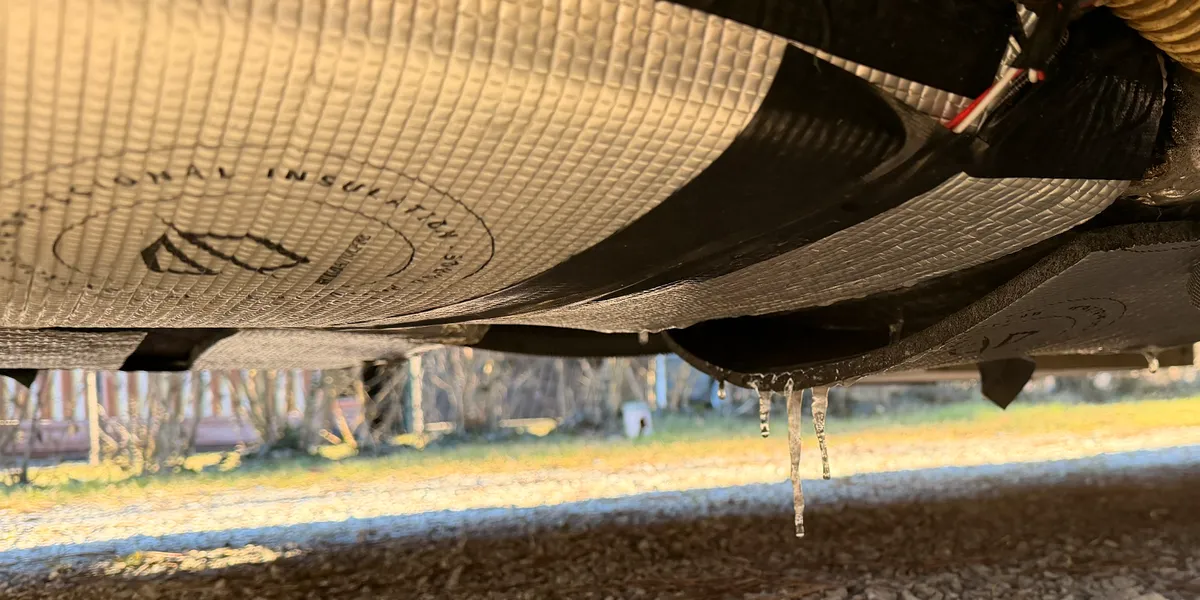
installed and wrapped heater pads
External Water Pipe Lagging
The next piece of the puzzle, is lagging the drain pipes leading from the underslung tanks and ensuring they’re well fastened with zipties.
This wont prevent frost entirely, but coupled with the heater pads, it gives you a better chance.
Internal Water Pipe Lagging
There are a few internal pipes that run behind the shower, or up into the sink. These aren’t as easily accessible as the external pipes, but I’m intending to further insulate these internal pipes (alongside fixing a leak we’ve identified…), in the coming weeks.
Frost Protection Cable Kits
The final thing I’d like to do, but haven’t gotten to, is installing something like this frost protection cable kit around the pipes and under the lagging.
I’ve yet to figure out the wiring setup, but this, or perhaps a 12V equivalent if there is one, could work wonders at ensuring no parts of the plumbing drop below 0C for too long.
Keeping Your Van Warm
Water is important, but what’s more important is being able to sleep and survive in your van when the thermostat plummets. Unfortunately, the CV40s aren’t exactly the perfect example of insulation and we had to get a little creative on our trip in an attempt to keep the van comfortable.
Polar Thermal Window Covers
These are… amazing. We had a bad experience with window covers on our old VW T6, which meant I was a little hesitant about buying these from Polar Technologies, but they’ve been wonderful. They fit really easily onto the cab windows and help retain a lot of heat that would ultimately get whisked away through the glass.
They’re a little bulky, so we end up storing them in our rear thule towbox that comes with us as a mini-garage on larger trips. This made it really straightforward for us to store them whilst travelling and we also didn’t have to worry at all about them being damp or still frozen as that box doesn’t contain anything that can’t survive a bit of moisture.
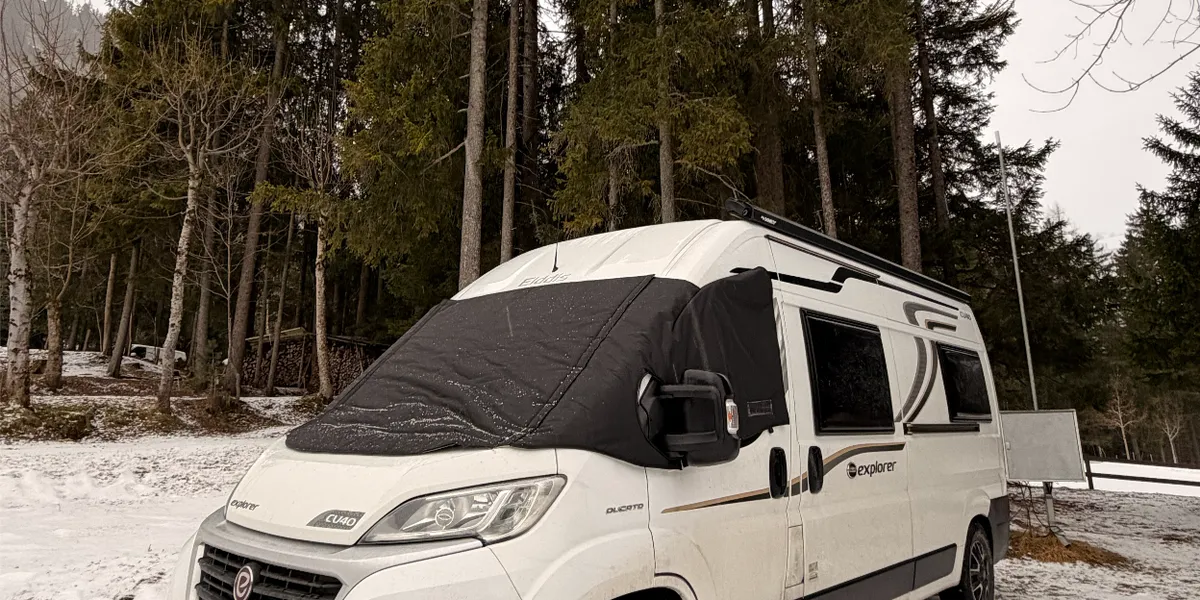
polar blinds
Keep an Electric Heater Handy
The whale heaters onboard these vans are somewhat notorious for breaking down if you look at them funny. We had a few nights where it died on us completely which isn’t ideal.
Thankfully, we had the foresight to purchase a small electric fan heater and kept it stored away under the dinette seats next to the fuse box for a rainy (cold) day.
We purchased this Philips 3000 series heater due to it having safety features like automatic turn off should it tip. Having 2 large dogs running around the van, this is definitely a possibility and we didn’t want to have to worry about potential fire hazards cropping up during the night.
Note: some campsites have 6 amp limits which that specific heater exceeds. Something to bear in mind when choosing the heater that’s right for you.
Also it’s worth noting, some campsites charge anywhere from 50 cents up to a Euro per KWH used. Using this exclusively can lead to quite significant electricity bills. We did consider this, but figured it would be better to pay this with gritted teeth rather than suffer chittering teeth.
Extra Blankets
You can never have too many blankets as we found out. We purchased 2 voited blankets way back when we had our first VW T6 Campervan and they’ve been fantastic.
Given the fact they are durable and waterproof, they’re great for doing things like laying them over your actual bed to provide an extra layer of warmth. As well as protecting your sheets from certain furry friends that are getting entirely too demanding as they age…
Back Door Draught Protection
One big source of heat loss is the draught that comes in between the back doors as you lay in bed. We found a great strategy for removing this is to hang up one of these voited blankets using some clips and having it cover the back windows and the door gap. We also ended up pushing some pipe lagging into the gap which helped immensely.
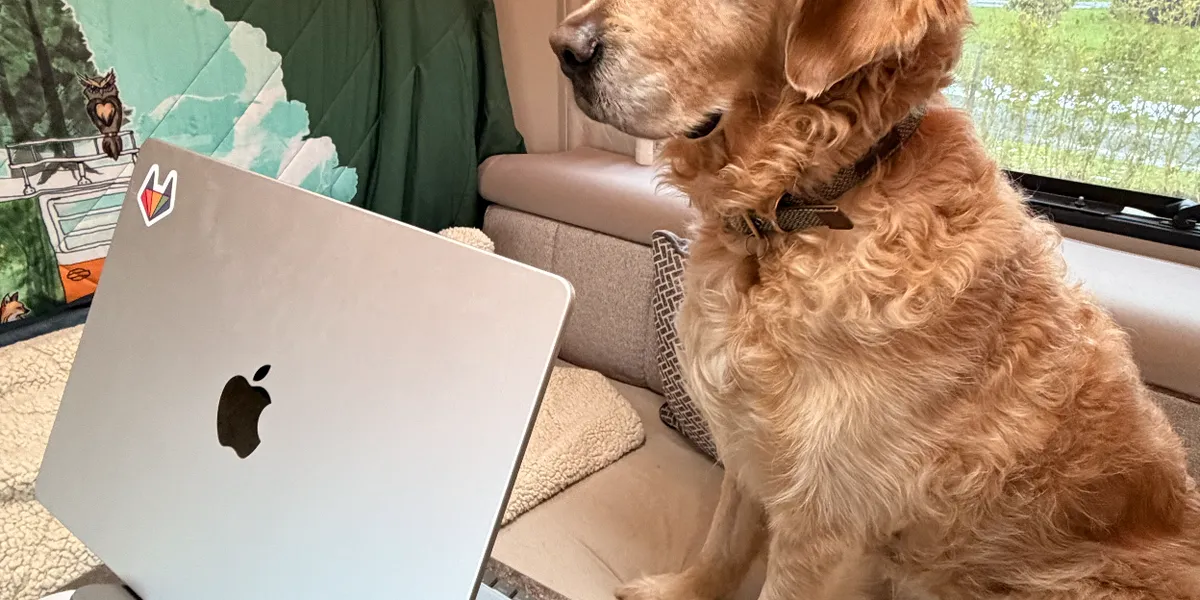
The blanket hung up at the back whilst Lewis is busy working
Sliding Door Insulation
Similar to the above tip, we ended up using the same clips to hang up one of our other blankets across the sliding side door.
A better alternative may be something like this insulated door cover. I can’t vouch for this particular one and it doesn’t seem to have any reviews, but it could be worth a punt for £30.
As part of our prep, we also purchased some foam seal tape 25mm x 25mm x 2m to provide a tighter seal between the door and the floor when the door is closed.
Covering Your Dashboard
One technique we’ll be sure to try next time is to use a blanket to cover the steering wheel and front dashboard. We’ve noticed that this is yet another big source of heat loss as it doesn’t feature a whole lot of insulation between the internal cab and the engine bay.
Back Door Insulation
All credit for this tip goes to LeisureBit - Original YouTube Video.
Early on in our prep, we opted to make this improvement by buying some Van Fleece insulation and some Dodo Mat sound deadening and used both to insulate the space under the plastic back door covers.
This did help reduce some of the cab noise when we were driving as well and isn’t too hard to do! I’d definitely recommend giving this a shot.
Thermometer
We ended up purchasing and installing a simple thermometer that we installed next to our heater control panels. Specifically, we bought this Govee Room Thermometer Hygrometer as it can connect to your smartphone via bluetooth and give you nice visualisations for how hot or cold it’s gotten overnight.
Wrapping it Up!
Hopefully you found this list useful and it helps you get out there and enjoy your campervan in the winter months! It’s such a shame for them to sit there over winter when it’s arguably one of the best times to get out in them.
If you’ve got any other suggestions or tips, then please let us know! We’re on Instagram and are always open to chats with folks!