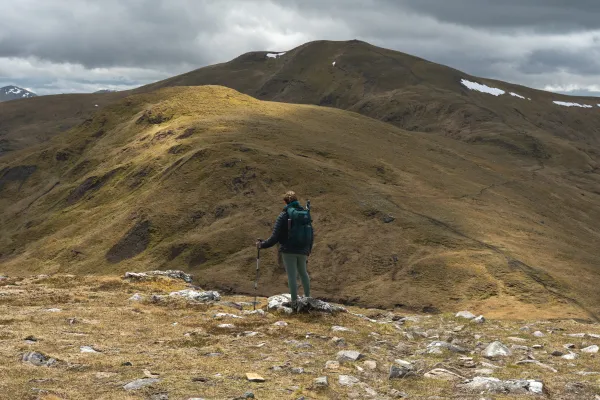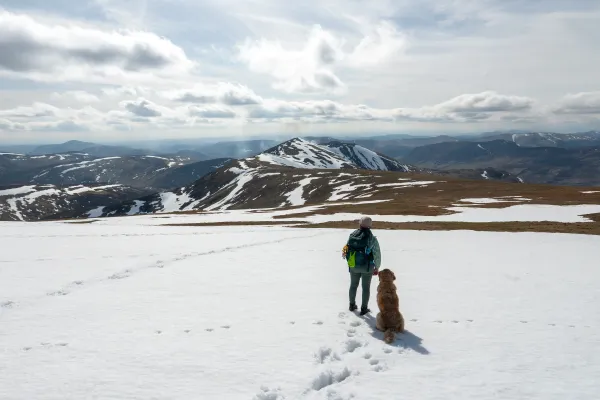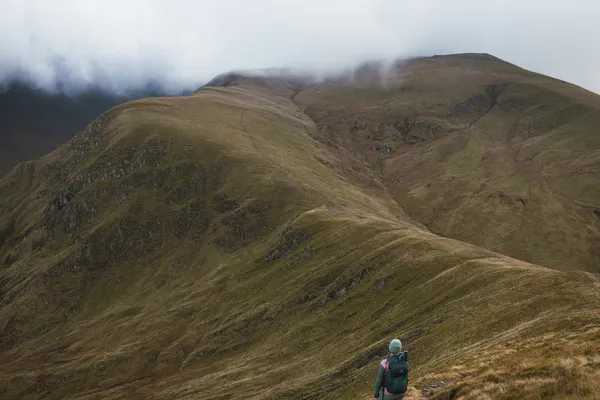
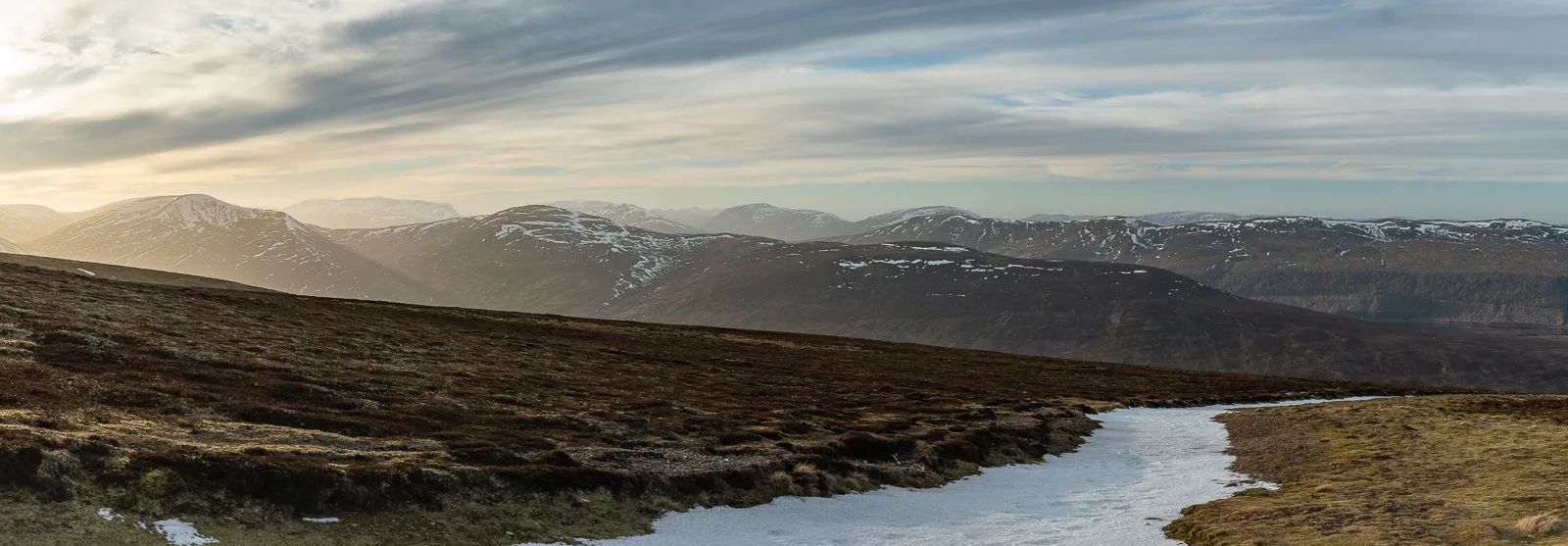
Free layby parking on the A9 at Drumochter Pass. Space for around 10–15 cars on the roadside. No facilities on site.
Carn na Caim and A’ Bhuidheanach Bheag are a pair of Drumochter Munros that experienced baggers will tell you to save for winter — and they’re absolutely right. In summer, these are broad, featureless plateau mountains with limited views. In winter, with a snow coat on and the winter light catching the ridges, they transform into something atmospheric and genuinely beautiful.
We’d been watching the weather for weeks, waiting for a gap between the back-to-back winter storms battering Scotland. When a window opened with low winds and limited precipitation, we jumped at it.
Route Overview
- Carn na Caim — Munro — The Rocky Hill of the Curve — 941m
- A’ Bhuidheanach Bheag — Munro — The Little Yellow Place — 936m
- Total distance: 19km (out and back)
- Total ascent: 824m
- Moving time: ~5 hours
- Difficulty: Moderate — straightforward but long, featureless plateau in mist
| Munro Name | Pronunciation | Translation | Height |
|---|---|---|---|
| Carn na Caim | Carn na Came | Rocky Hill of the Curve | 941m |
| A’ Bhuidheanach Bheag | A Voo-an-ach Vake | The Little Yellow Place | 936m |
The route starts from a layby on the A9 at Drumochter Pass. Most of the elevation is gained in the initial climb; the traverse between the two summits is relatively flat across the plateau.
Getting There and Parking
Free layby parking on the A9 at Drumochter Pass (parking bay #87, PH18 5SY). Space for 10–15 cars on the roadside, no facilities. From Glasgow, allow about 2.5 hours. The A9 is a fast road — take care crossing to the start of the walk.
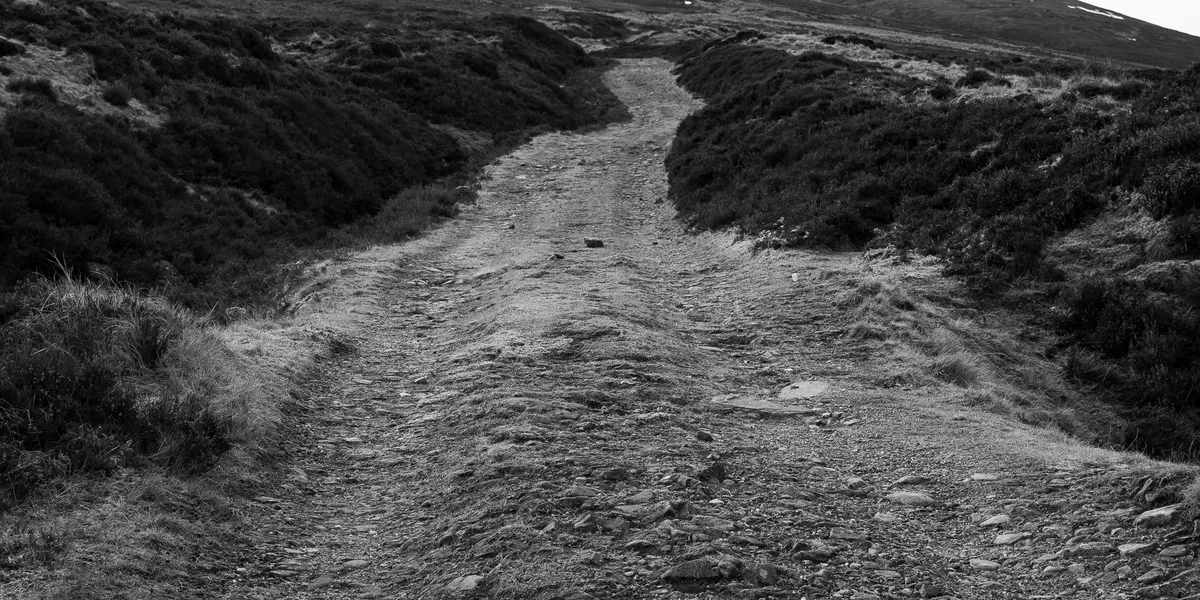
The path heading up from the A9 layby
The Initial Ascent
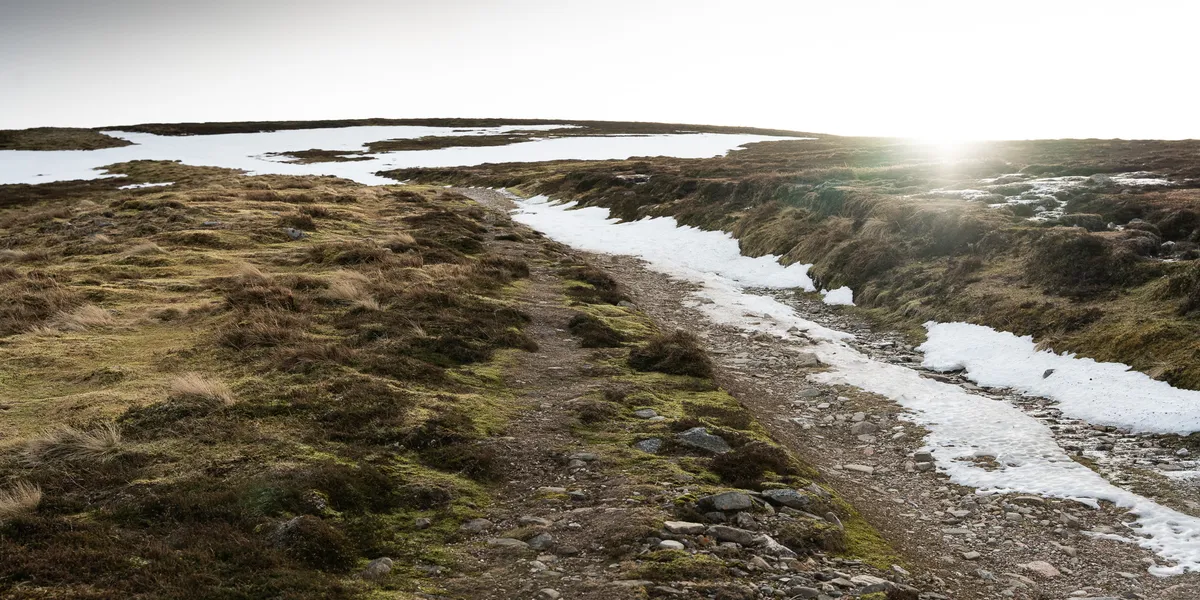
Sunrise creeping over the peaks at Drumochter
Cross the A9 and head through the gate to start the walk. The path is well defined, though on our January visit it was covered in slippery snow patches. The snow wasn’t deep enough for crampons on the lower section, but higher up we regretted not putting them on sooner.
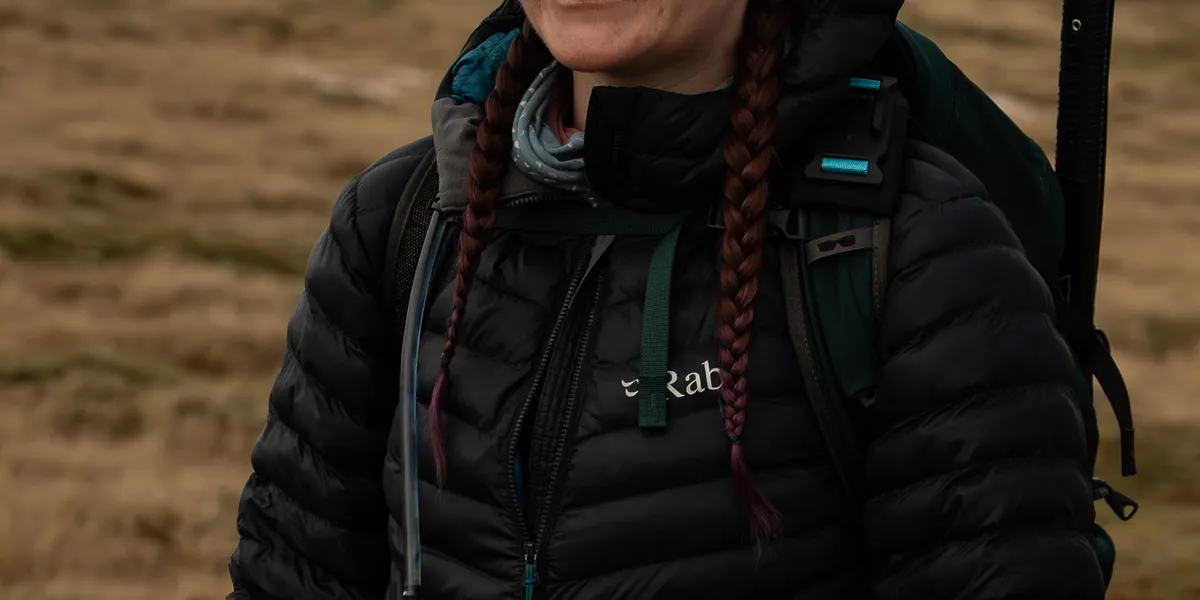
Donna ascending through the winter conditions
This is an unusual hike — most of the elevation (around 450–500m) is gained in the initial climb. After that, the traverse between the two peaks is mostly flat across the plateau, with the remaining ascent made up of dips along the way.
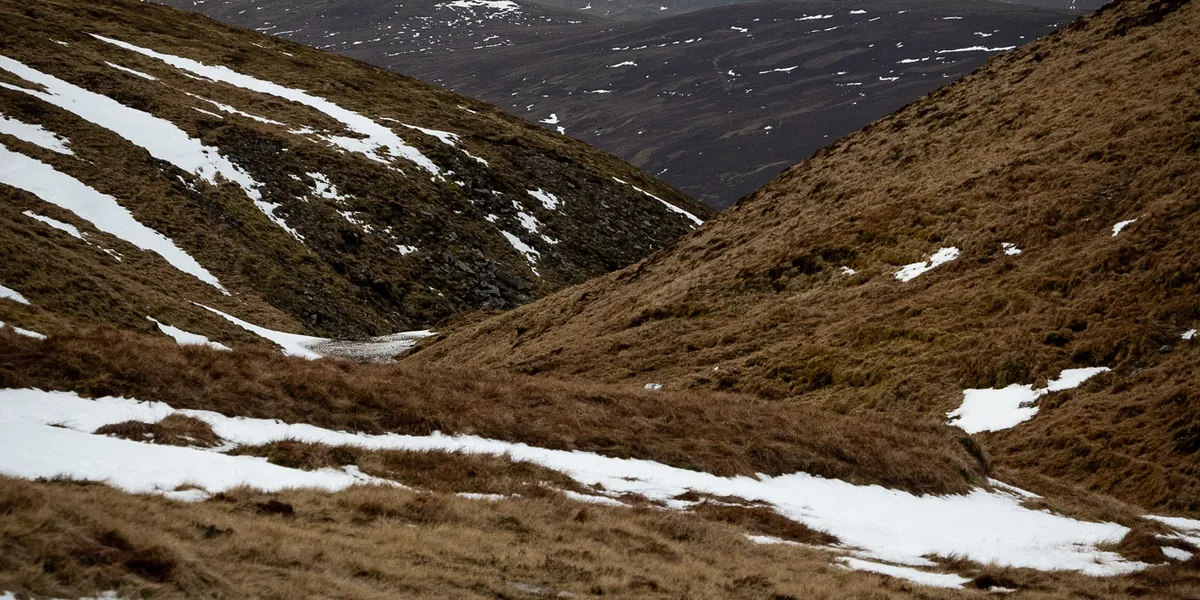
Looking down between the ridges in winter
Carn na Caim Summit — 941m
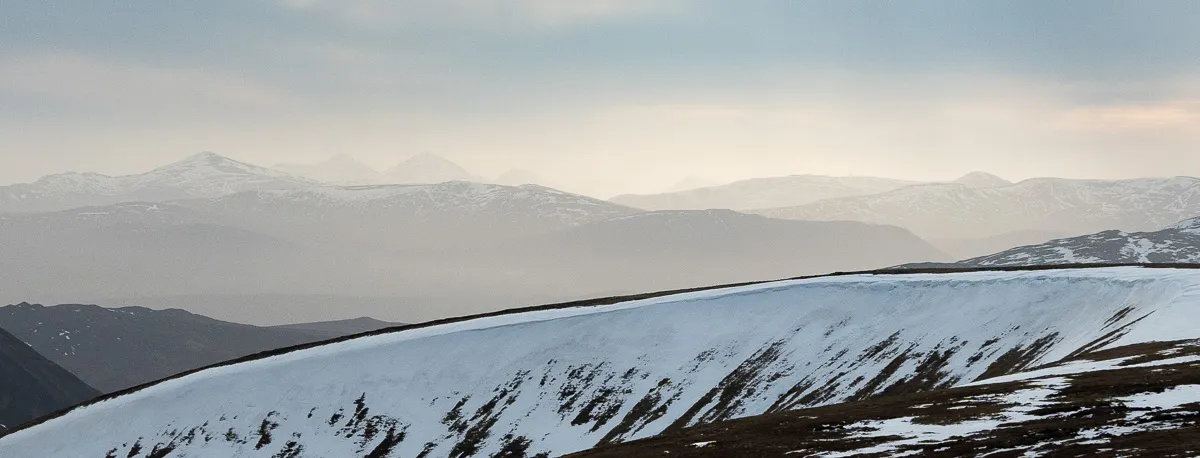
Winter skyline views from the plateau
From the top of the initial ascent, veer left to head towards Carn na Caim’s summit. Be aware that GPX tracks can be slightly off in this area — ours took us to the left of the actual path that follows metal fence posts. Following the fence makes for easier going.
The summit doesn’t offer much in the way of dramatic views — it’s easy to see why experienced baggers recommend doing these in snow conditions. We snacked on fudge, grabbed some drone shots, and started towards A’ Bhuidheanach Bheag.
The Traverse — Carn na Caim to A’ Bhuidheanach Bheag
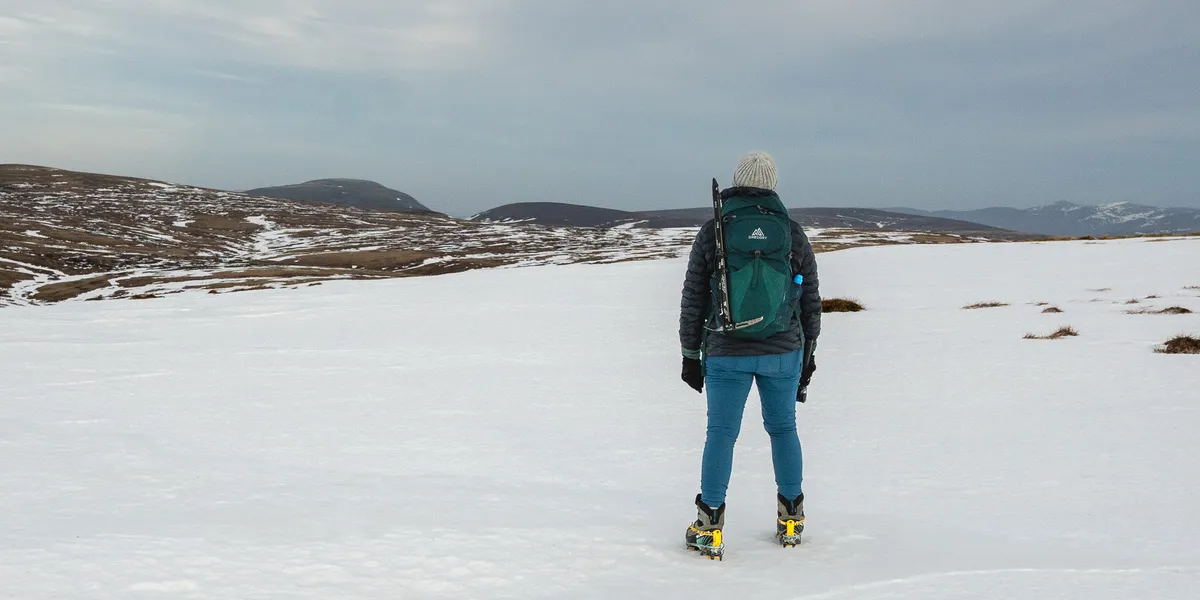
The traverse between the two Drumochter Munros
Between the two summits, there were snow-filled dips to navigate. We partook in some bum-sliding, which wasn’t as comfortable as you’d imagine — the snow had been through several thaw-freeze cycles and made for a bumpy ride.
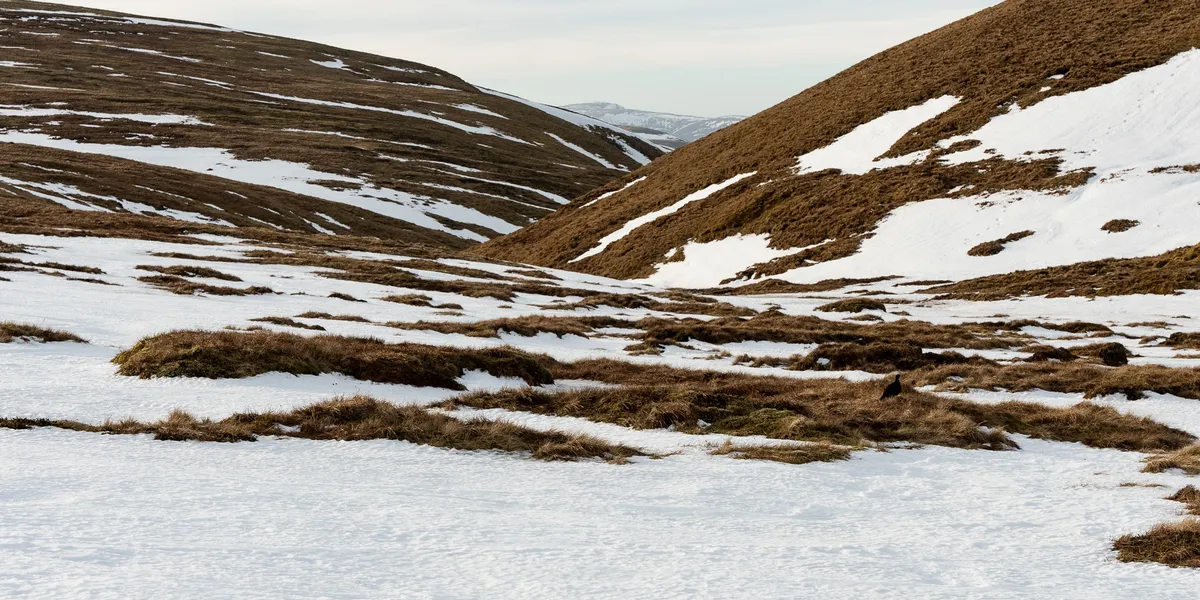
The plateau between the two summits
A’ Bhuidheanach Bheag Summit — 936m
We made the mistake of not putting crampons on sooner for the ascent of A’ Bhuidheanach Bheag. Stubbornly trying to manage with just boots over frozen snow patches resulted in a tumble and a bruised knee. Lesson learned: put crampons on at the first sign of ice, not when you’re already slipping.
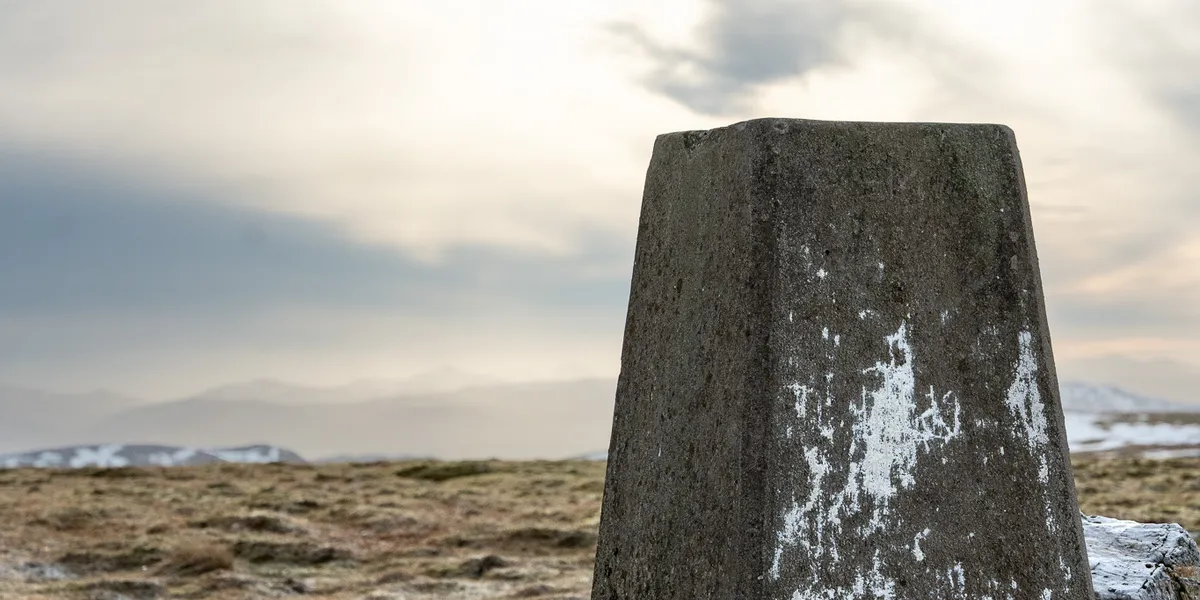
The cairn at A' Bhuidheanach Bheag
After a quick chat with another couple at the summit, we had our sandwiches and started the descent.
The Descent
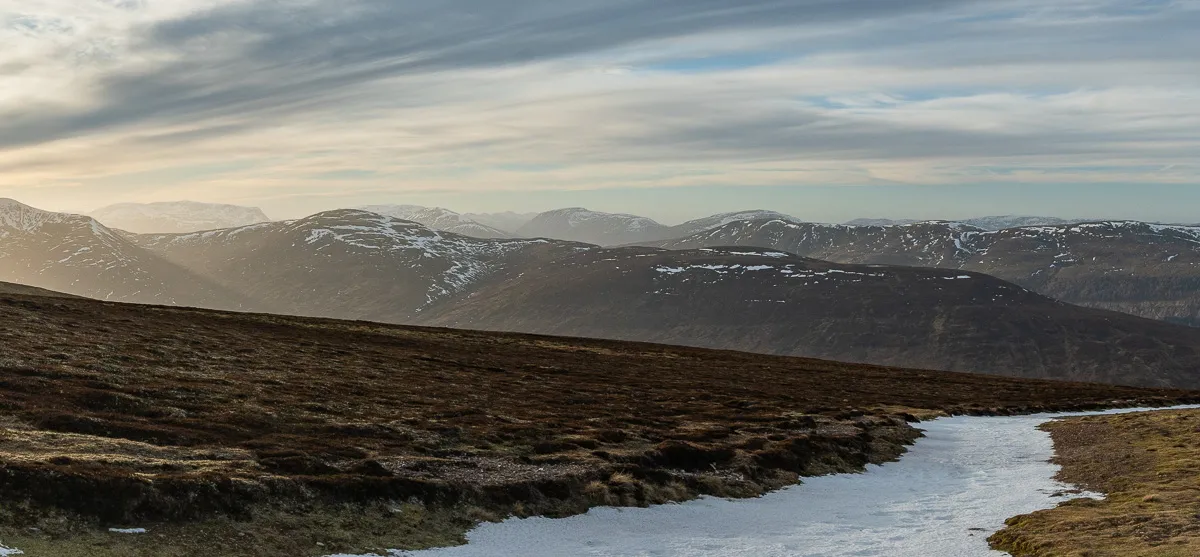
Incredible sunset views on the return to the van
The return follows the same route back. We were rewarded with spectacular sunset views as we made our way back — the winter light across the Drumochter hills was the highlight of the day.
When to Climb
Winter (December–March) is the time to do these. The snow transforms featureless plateaus into atmospheric, beautiful mountains. The shorter days add a sense of urgency — plan your timing carefully.
Summer (May–September) is perfectly doable but the mountains are, by general consensus, less interesting without their winter coat.
Autumn and Spring can both work, though the plateau is exposed and conditions can change rapidly.
Combine With
Geal Charn and Creagan Mor start from the same area of the A9. The Drumochter Pass has several other Munros accessible from laybys along the road, making it a productive area for a multi-day trip.
Tips for This Route
- Do these in winter. Experienced baggers universally recommend snow conditions for the Drumochter Munros. They’re transformed.
- Put crampons on early. Don’t wait until you’re slipping — by then it’s too late. We learned this the hard way.
- Follow the fence posts. They’re your best navigation aid on the plateau, especially in poor visibility.
- The distance is deceptive. At 19km, this is a longer day than the modest ascent suggests. Factor in the flat-but-long traverse.
- Cross the A9 carefully. It’s a fast road — take your time.
- Use a gear checklist. We used ours to make sure we had everything — it’s worth the two minutes.
Frequently Asked Questions
Are Carn na Caim and A’ Bhuidheanach Bheag worth doing? In winter, absolutely. In summer, they’re honest Munros but lack the drama of more popular peaks. If you’re ticking off numbers, they’re perfectly pleasant. If you want memorable, save them for snow.
How hard are they? The terrain is straightforward — no scrambling, no exposure. The challenge is the 19km distance and the featureless plateau navigation in poor visibility. Allow 5–7 hours.
Where do you park? Free layby on the A9 at Drumochter Pass (PH18 5SY). Space for 10–15 cars.
Are these suitable for dogs? The terrain is fine for dogs — gentle slopes, no scrambling. The A9 crossing requires care. Keep dogs on a lead near any livestock.