Small informal car park on the single-track road off the A85 in Glen Dochart, near Auchessan farm. Free parking, space for around 10 cars.
If I had to describe this hike in one word, it would be “bog.” Meall Glas and Sgiath Chuil are a demanding pair of Munros in Glen Dochart that will test your fitness, your patience, and your relationship with waterproof boots. At nearly 20km with 1,338m of ascent — including an “extremely, very steep” descent to the bealach and a terrifying scramble up slippery grass on Meall Glas — this was the toughest day we’d had in the mountains at that point.
But it was also the day that tested our limits and showed us we could push through. These were Munros 16 and 17, our first outing after completing a winter skills course and buying proper hiking boots. Both decisions proved life-saving.
Route Overview
- Sgiath Chuil — Munro — The Corner Wing — 921m
- Meall Glas — Munro — The Green Grey Hill — 959m
- Total distance: 19.7km
- Total ascent: 1,338m
- Moving time: ~7 hours
- Total time: ~10.5 hours
- Difficulty: Very Strenuous — long distance, extreme ascent, boggy terrain, steep bealach
| Munro Name | Pronunciation | Translation | Height |
|---|---|---|---|
| Sgiath Chuil | Skee-a Chool | The Corner Wing | 921m |
| Meall Glas | Myall Glass | The Green Grey Hill | 959m |
The route starts from a small car park near Auchessan farm in Glen Dochart. You climb Sgiath Chuil first, descend the notoriously steep section to the bealach, then ascend Meall Glas before returning to the car park.
Getting There and Parking
Small informal car park on the single-track road off the A85 in Glen Dochart, near Auchessan farm (FK20 8RH). Free parking, space for around 10 cars. From Glasgow, allow about 90 minutes via the A82 and A85.
We drove up the night before and camped in the car park — a good strategy for an early start.
Morning at the camper van before the hike in Glen Dochart
The Approach and Sgiath Chuil
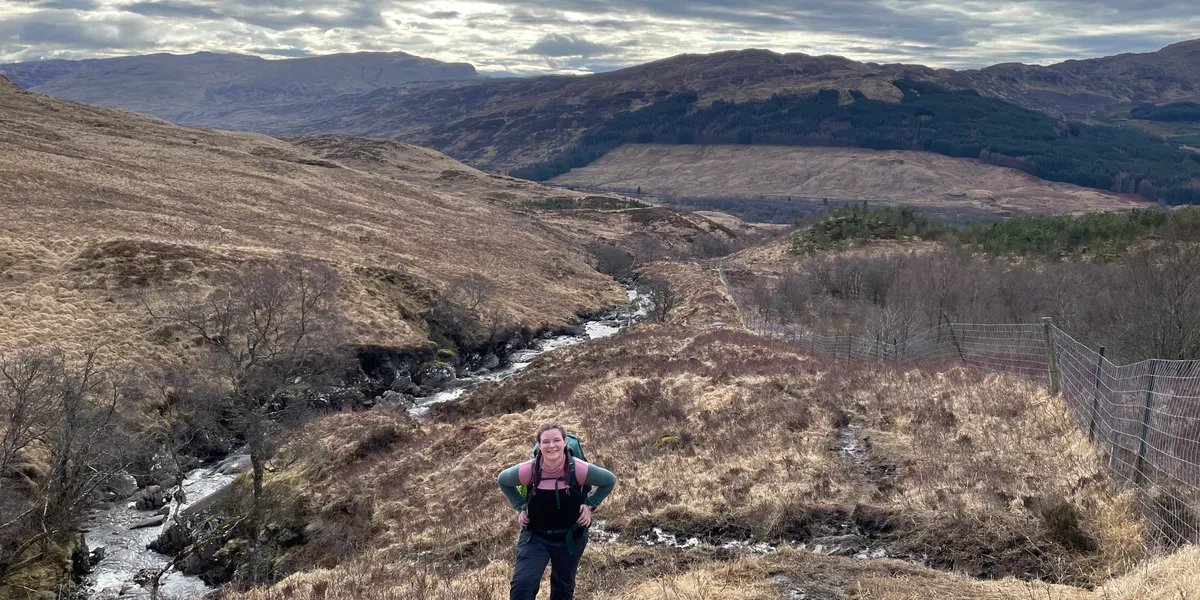
The day started with perfect spring conditions. Lewis had chances to run and swim in the river alongside the path, and the initial walk-in was pleasant.
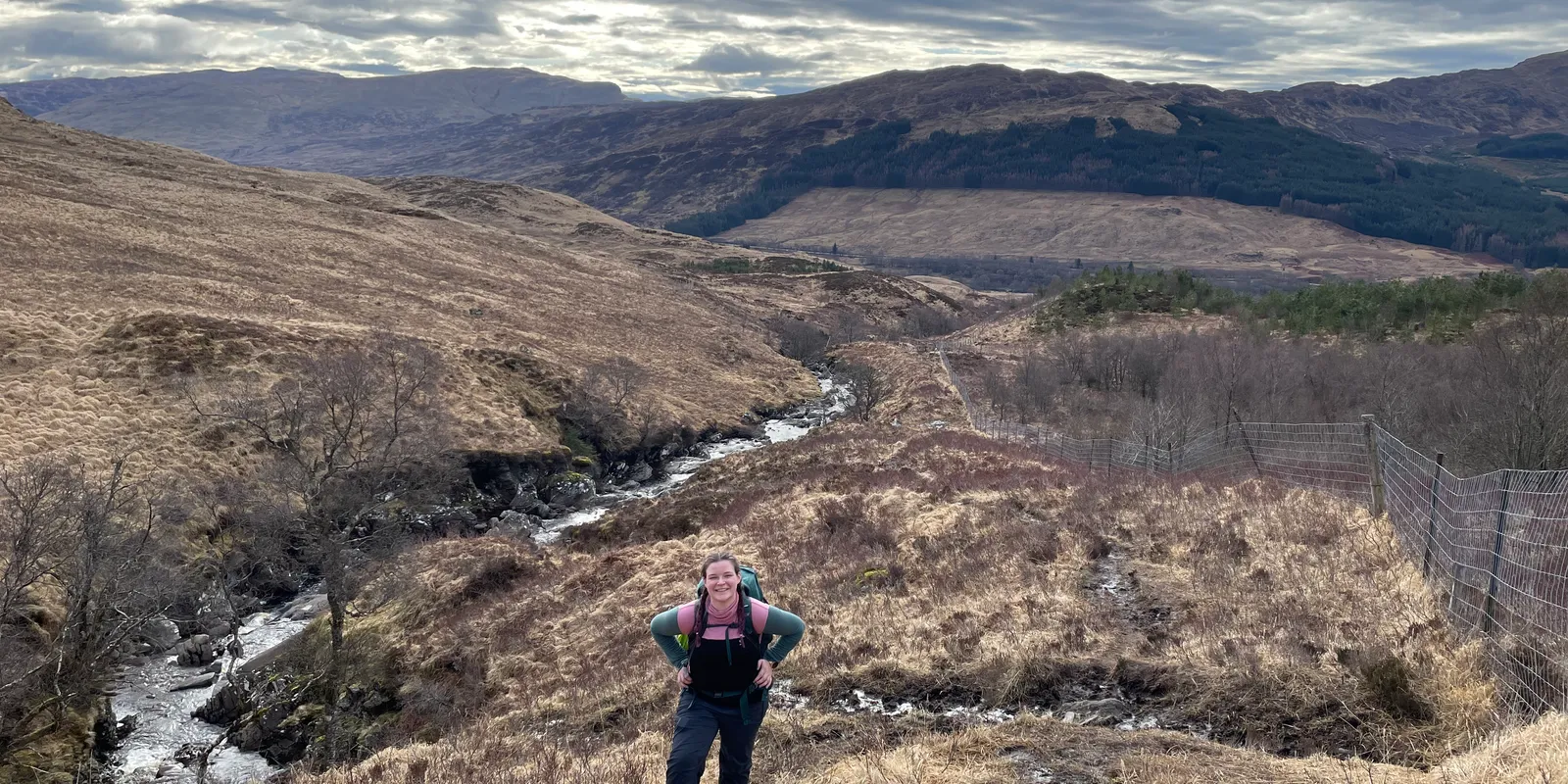
Then the bog started. The terrain was soaked through from snowmelt and heavy rainfall — each step involved pulling heavy boots out of the suction. Manageable at first, but over the course of the day it sapped all the energy from our legs, resulting in cramp and exhaustion.
The boggy approach through Glen Dochart
The ascent of Sgiath Chuil was straightforward if slow-going. The gradient is steady and there’s nothing technically challenging — the main difficulty is sustaining effort through the bog.
The Bealach — The Crux of the Day
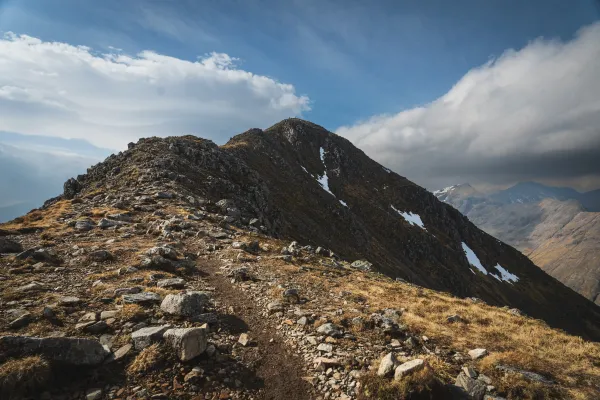
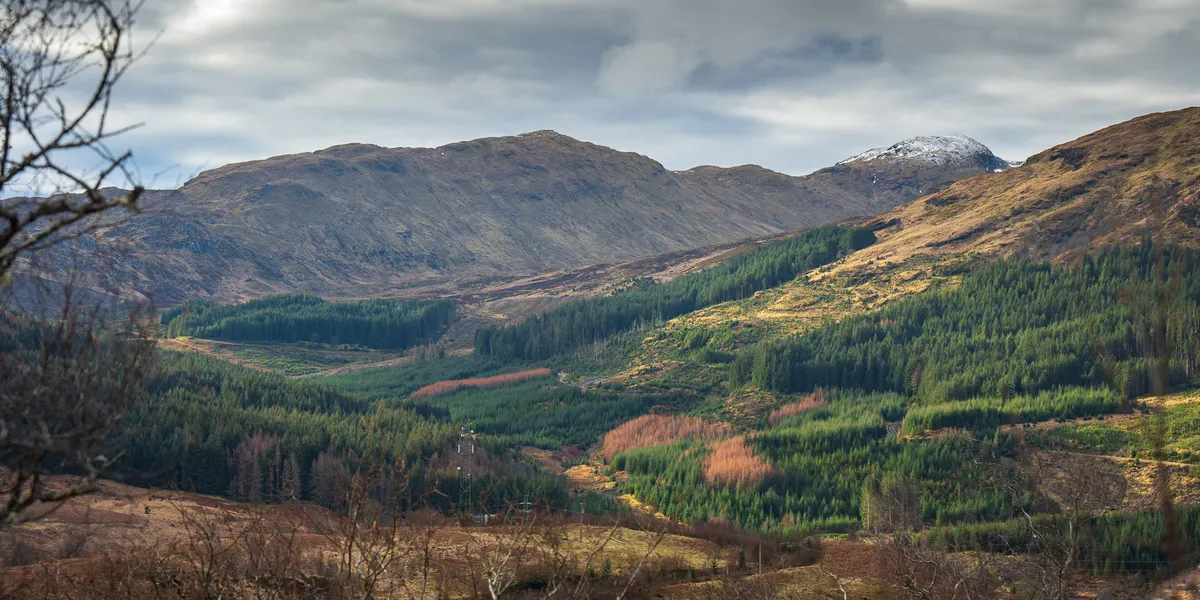
The real challenge came after topping Sgiath Chuil: the descent into the bealach between the two peaks. Walkhighlands describes it as “extremely, very steep” — not an understatement. Donna figured out that bum-sliding down the mountain was significantly easier and gave our cramping legs some respite.
The steep descent into the bealach between Sgiath Chuil and Meall Glas
Meall Glas — The Steep Scramble
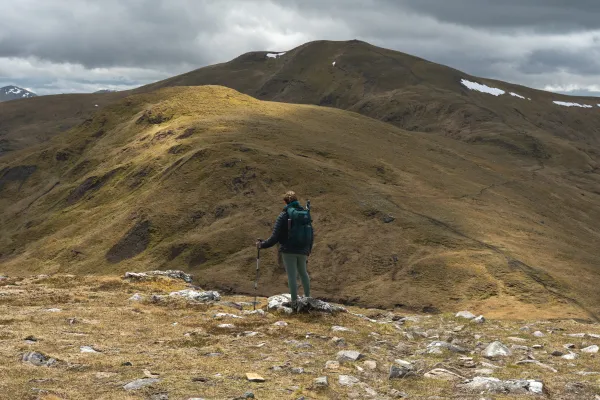
Crossing the bealach, we started the 360m ascent up Meall Glas and found ourselves slightly off course. This landed us on some of the steepest and slipperiest terrain the mountain had to offer. We were reduced to scrambling up in a crawl, kicking feet deep into slippery grass and moss and holding on to anything we could.
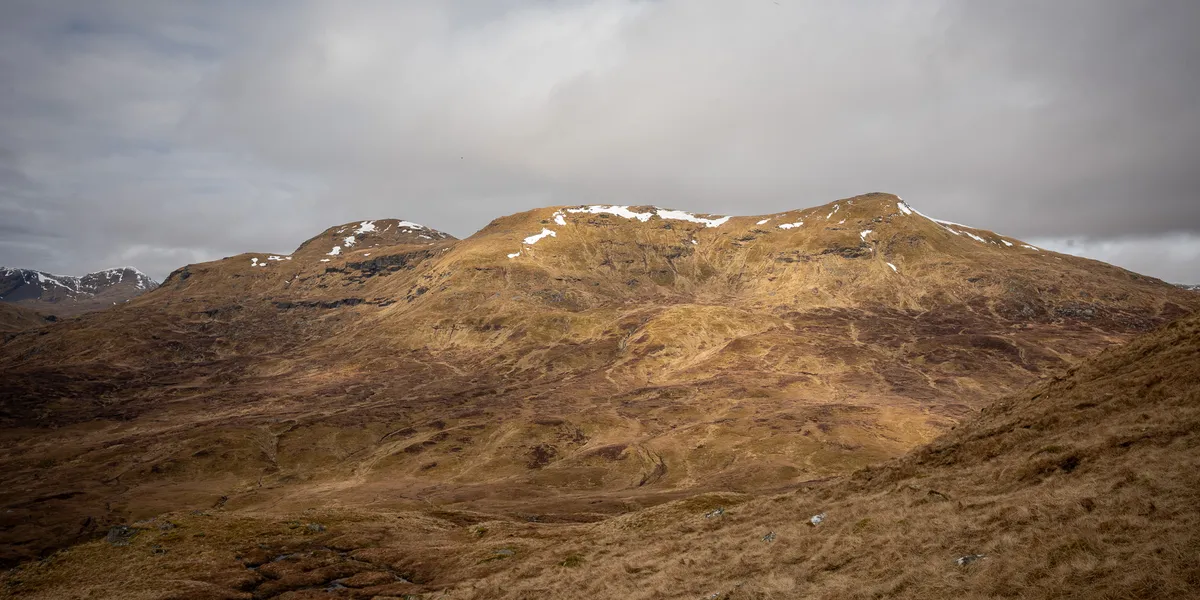
The steep slopes of Meall Glas
With some help from Donna, I managed to overcome a moment of genuine panic and scramble up the final section. Once past it, the most technical ground was behind us. I took 5–10 minutes to recover from the cramp that was now plaguing my legs.
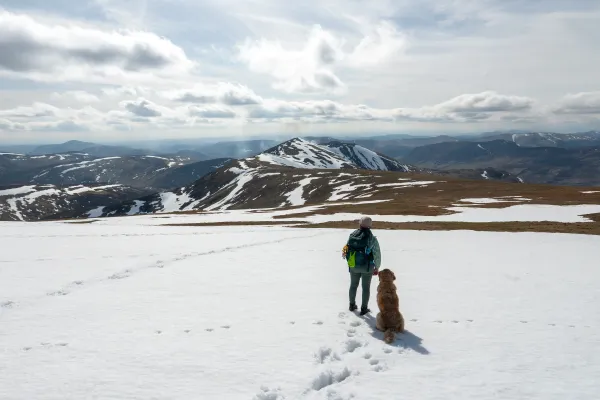
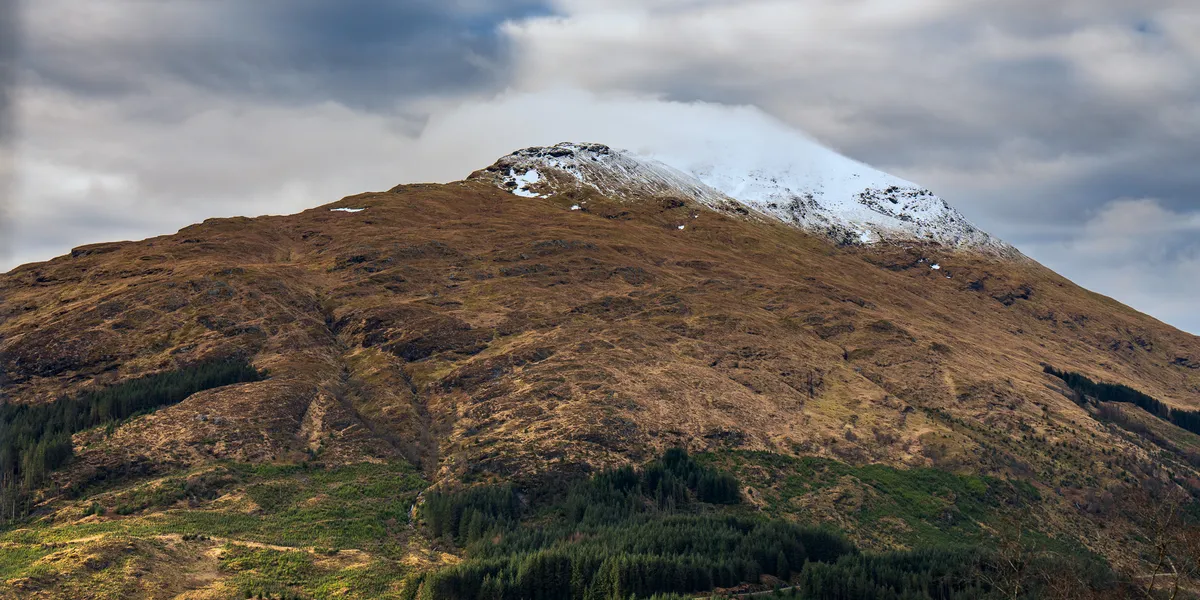
We walked past the sub-summit of Meall Glas and across the ridge towards the real summit. The final climb involved practicing snow traversal techniques from our winter skills course — kicking in steps with jelly legs was challenging, but it confirmed we’d learned the right skills.
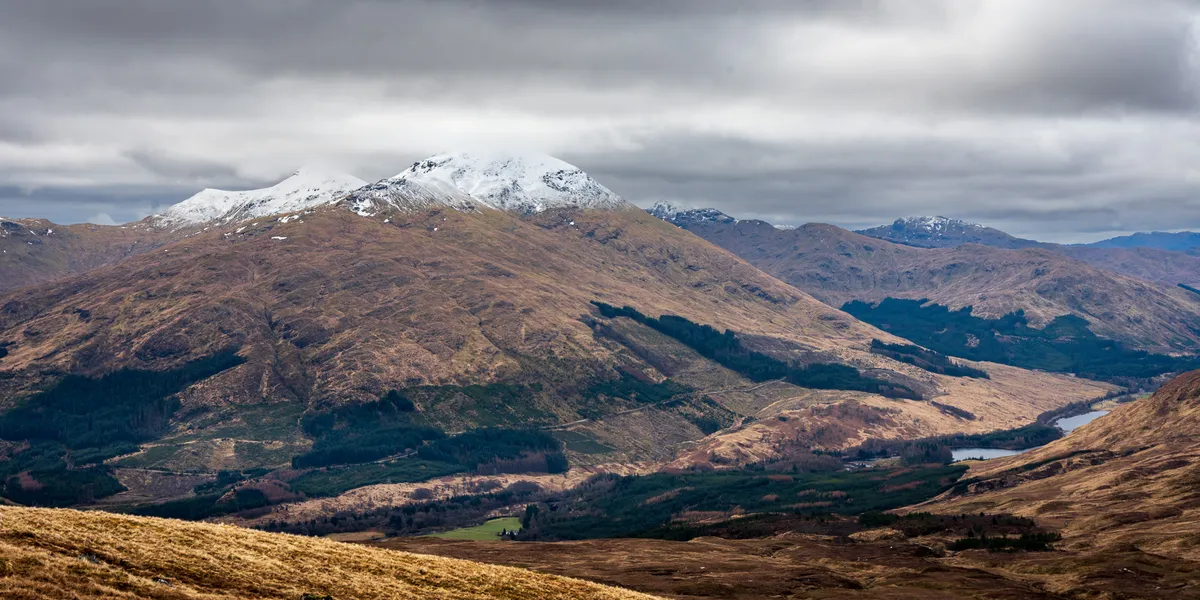
The snowy ridge approach to Meall Glas summit
The Descent and the Long Walk Home
We did the traditional boop of the cairn and started making our way off the mountain. With limited visibility and no clear path marked, navigation was a real test. Our fitness was completely drained, and working through the remaining bog proved to be as much a mental challenge as a physical one.
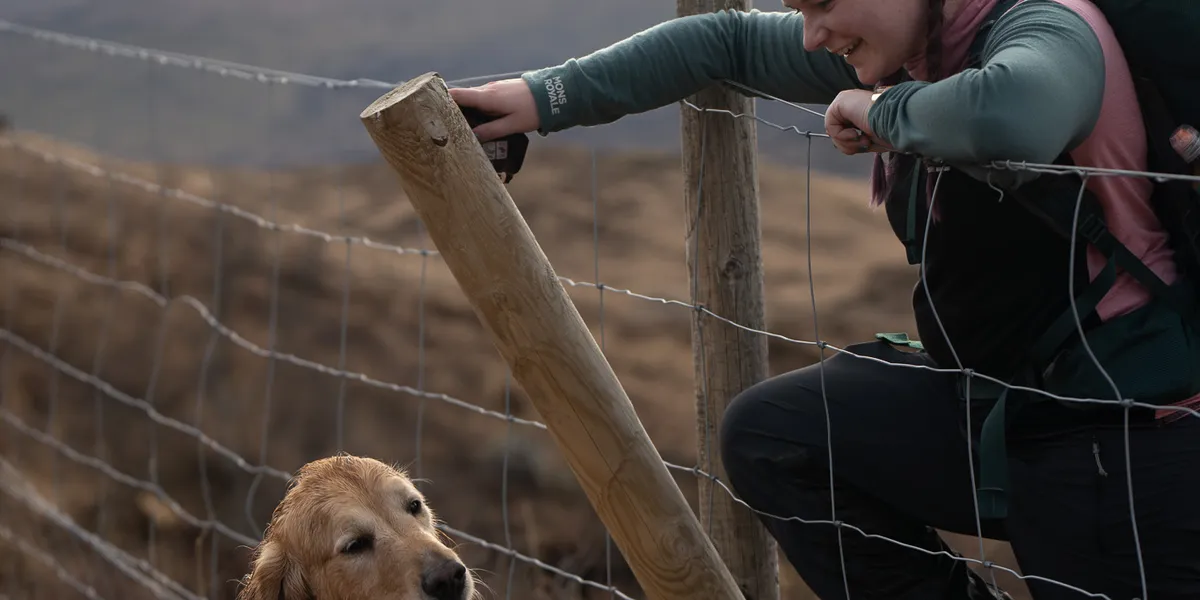
The long boggy walk back through Glen Dochart
The hike back felt never-ending. We were delighted to see the van and the comfort of a change of clothes.
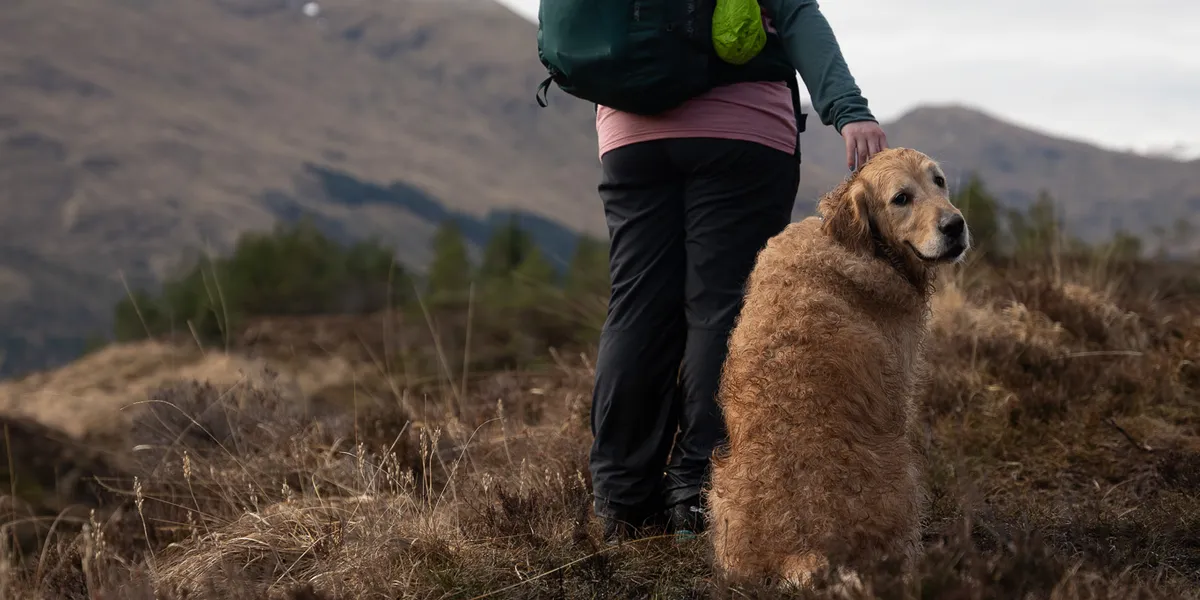
Exhausted but satisfied — back at the van
Lewis, our golden retriever, was exceptionally good throughout and deserved the substantial meal he got back at the van. He curled up and instantly fell asleep — he’s been enjoying a very relaxed day at our feet since.
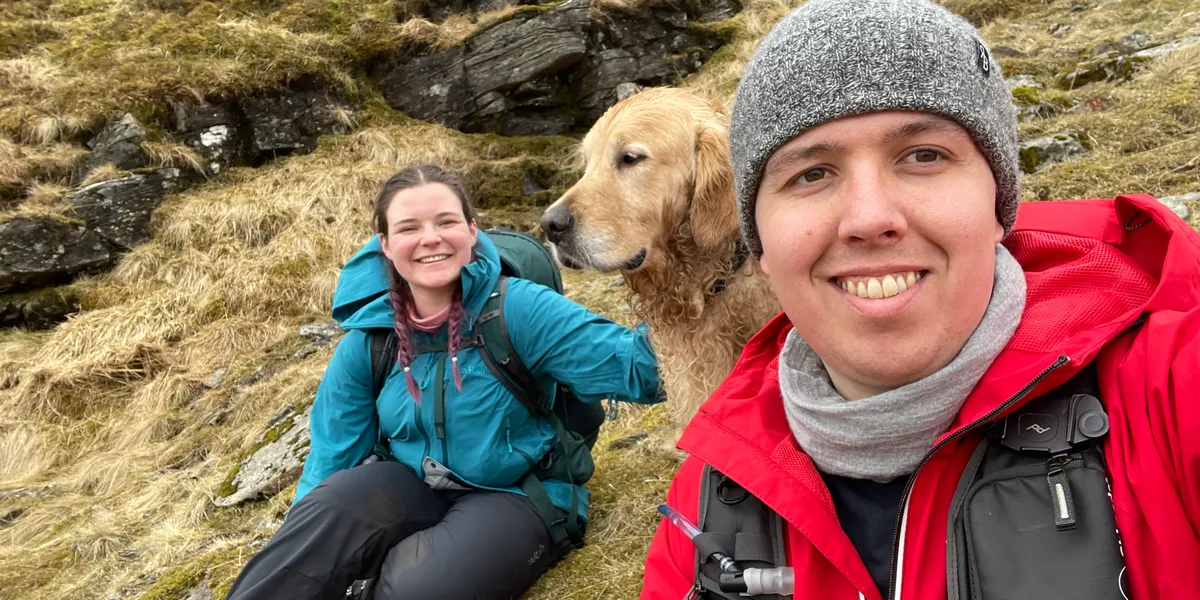
Lewis the golden retriever, exhausted after Meall Glas and Sgiath Chuil
When to Climb
Summer (June–August) gives the driest conditions for the boggy terrain and the longest days for the distance. Autumn can be beautiful but the bog worsens after rain. Winter makes the steep bealach and Meall Glas ascent considerably more serious — crampons and an ice axe would be essential. Spring — when we did it — means snowmelt and maximum bog. Not ideal, but it has character.
Combine With
These are a standalone day — at nearly 20km with 1,338m of ascent, you won’t want anything else. The Glen Dochart area is close to Ben More and Stob Binnein and Ben Challum for a multi-day trip, and Meall Bhuide in Glen Lyon makes a gentler confidence-rebuilder the day after — which is exactly what we did.
Tips for This Route
- The bog is the real enemy. Waterproof boots with good ankle support are essential. The suction effect drains energy over the full distance.
- The bealach descent is serious. Don’t underestimate the steepness. Bum-sliding is a legitimate technique here.
- Stay on the path up Meall Glas. We went off-course and hit the worst terrain. Follow the defined path to avoid the steepest ground.
- Navigation skills needed for the descent. Limited visibility and no clear path off Meall Glas mean you need map, compass, or GPS.
- Camp the night before. The early start helps with the long day ahead.
- Bring plenty of food. At 10+ hours total, you need more calories than a typical Munro day.
Frequently Asked Questions
How hard are Meall Glas and Sgiath Chuil? Very hard. The combination of 19.7km distance, 1,338m ascent, boggy terrain, and the steep bealach makes this one of the most demanding double-baggers in the Southern Highlands. Allow 8–11 hours.
Is the bealach really that steep? Yes. Walkhighlands’ description of “extremely, very steep” is accurate. In wet conditions, the descent is genuinely treacherous. Consider sitting and sliding if standing descent feels unsafe.
Where do you park? Small informal car park near Auchessan farm in Glen Dochart (FK20 8RH). Free, space for about 10 cars.
Are these suitable for dogs? Lewis managed it, but it was his hardest day in the mountains. The bog, the steep bealach, and the length make these challenging for even fit dogs. Only bring experienced mountain dogs.