
Stuchd an Lochain is one of those Munros that rewards you from the very first step. There’s no long walk-in, no trudging through boggy farmland — you start climbing immediately from the car park at Giorra Dam and within an hour you’re on a ridge with views that stretch across Glen Lyon and the Breadalbane hills. The payoff for the steep initial ascent is a superb ridge traverse that leads to a summit perched above Lochan nan Cat, a dramatic corrie loch hidden on the mountain’s north-east face.
With 760m of ascent over 10.5km, this is a moderately challenging day that can become significantly harder in winter conditions. We did this in February and the steep north face was icy enough to demand real care — crampons were essential.
Route Overview
- Stuchd an Lochain — Munro — Peak of the Little Loch — 960m
- Total distance: 10.5km (out and back)
- Total ascent: 760m
- Moving time: ~4 hours
- Difficulty: Strenuous — steep initial ascent, exposed ridge, rough terrain
| Munro Name | Pronunciation | Translation | Height |
|---|---|---|---|
| Stuchd an Lochain | Stoochk an Lochin | Peak of the Little Loch | 960m |
The route starts at Giorra Dam at the western end of Loch an Daimh in Glen Lyon. After crossing the dam, a steep climb up the north face brings you to the ridge, which you follow south-west to the summit. The return retraces the same route.
Getting There and Parking
The hike starts from a small free car park at the base of Giorra Dam in Glen Lyon. There’s space for around 10 cars and no facilities — this is shared with hikers heading for Meall Bhuide, which starts from the same spot.
Glen Lyon is the longest enclosed glen in Scotland and the drive in is part of the experience — narrow single-track roads wind through ancient woodland and past small settlements. From Aberfeldy, it’s about 40 minutes to the car park. From Perth, allow around 90 minutes. From Glasgow or Edinburgh, it’s closer to two and a half hours.
The remoteness of the car park means this is rarely overcrowded, even on good-weather weekends. Arrive at a reasonable time and you’ll find a space.
The Dam and the Path
The route starts by crossing the bridge over the river and following the paved road up to the top of Giorra Dam itself.
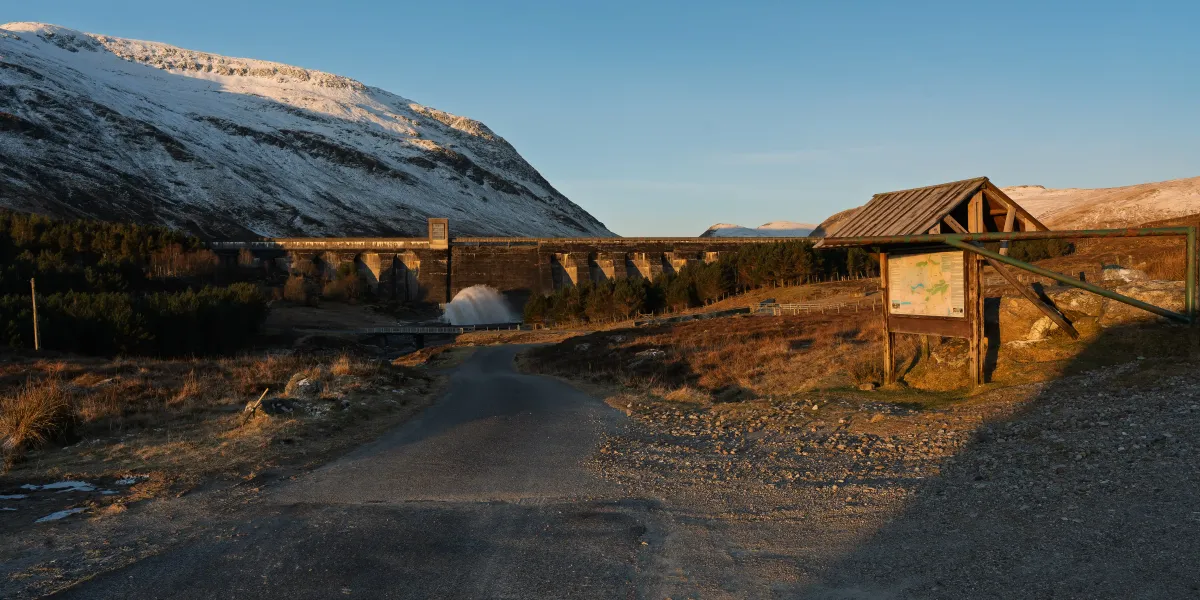
The starting point looking towards Giorra Dam
A short detour over the top of the dam is worth it for the views across Loch an Daimh and down into the glen. On a still morning, the reflections on the water are stunning.
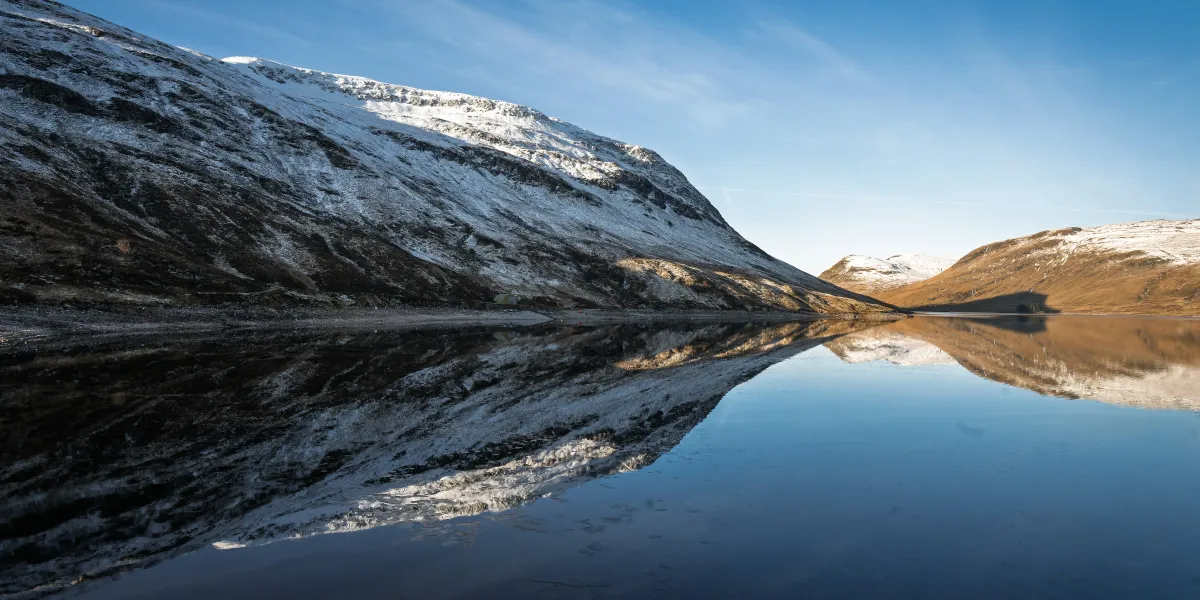
A look over the water from the top of Giorra Dam
After the detour, continue past the dam on the left until you come to a small cairn on your left-hand side. This marks the turn-off from the path that leads to a small boathouse — from experience, it’s easily missed. If you find yourself at the boathouse, you’ve gone too far. Look for the cairn and the faint path heading uphill.
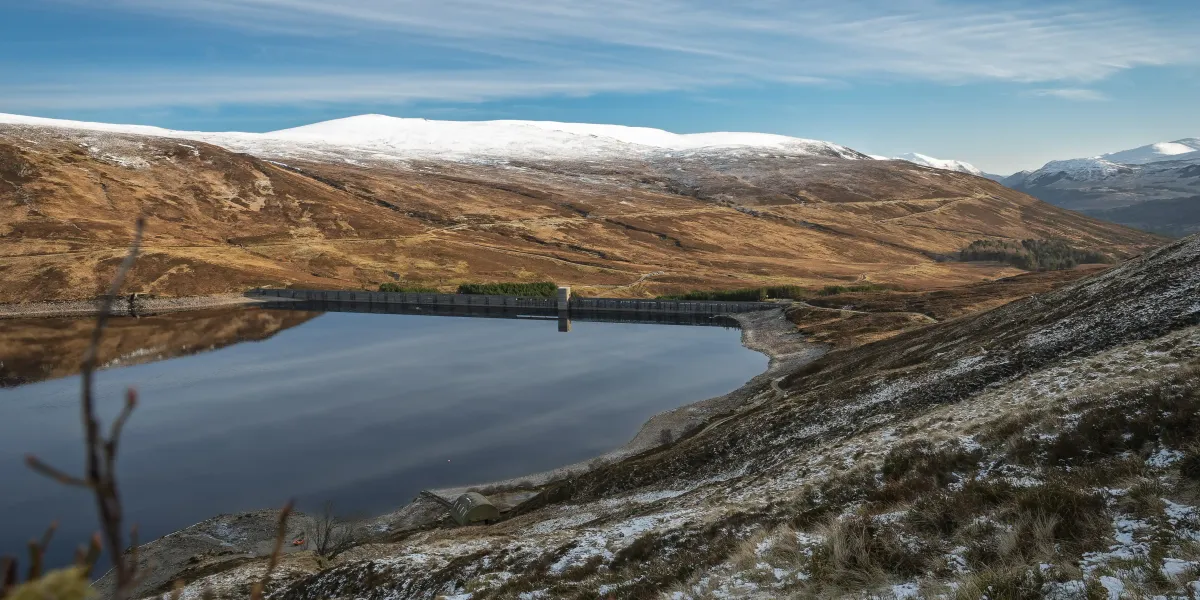
Looking down from the path towards Giorra Dam
The North Face — Steep Ascent to the Ridge
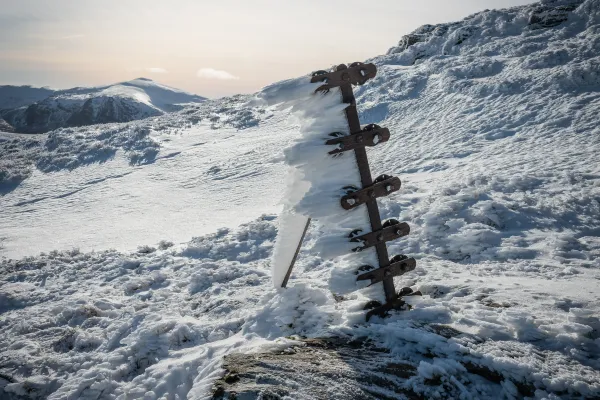
This is where the day gets serious. The path takes you immediately up the steep north face of the hill, climbing directly and relentlessly to the ridge above. In summer, this is a straightforward if breathless slog over grass and heather. In winter, as we found, it can be incredibly icy — the slope faces north and holds snow and ice well into spring.
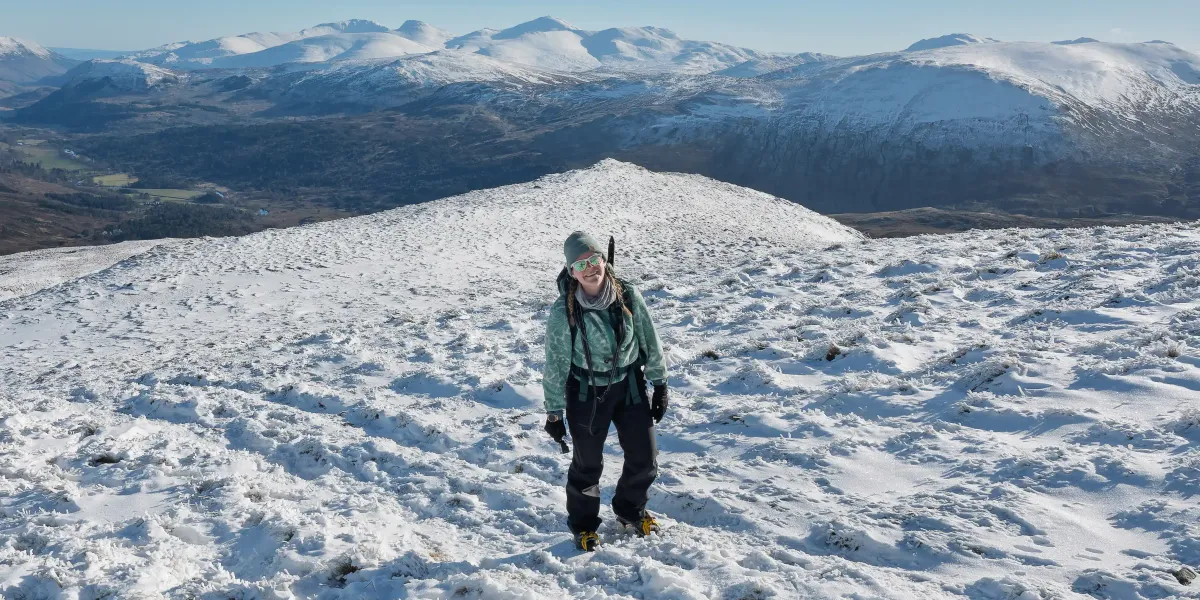
Donna enjoying the snow on the ascent
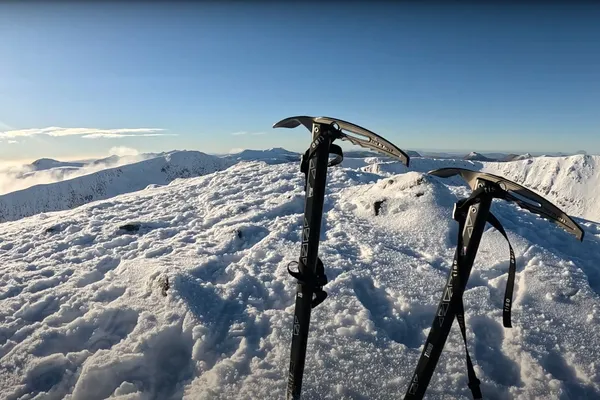
Crampons and an ice axe are essential in winter conditions here. The gradient is steep enough that a slip on ice would be difficult to arrest, and the frozen ground gives no purchase without proper equipment. We were glad of every piece of kit we’d brought.
The reward for the steep climb is that you gain height rapidly. Within 45 minutes to an hour of leaving the car park, you’re on the ridge with the hard work mostly behind you.
The Ridge Walk
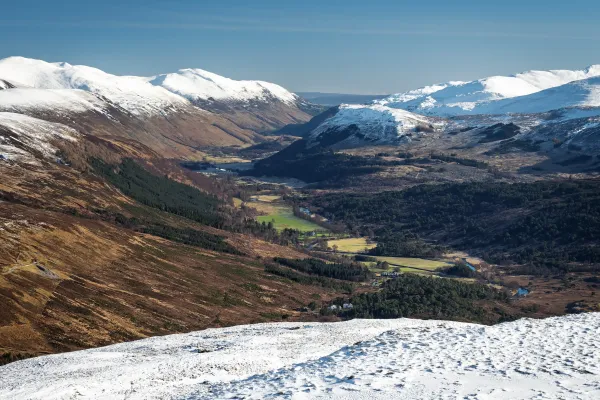
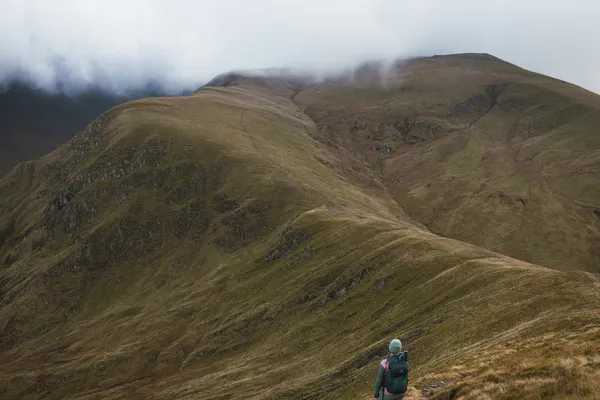
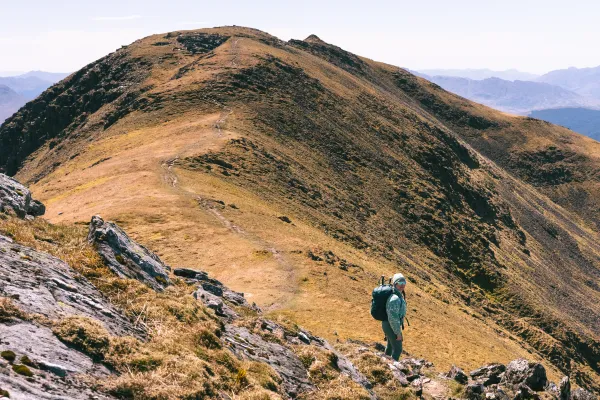
On reaching the top of the ridge, head right (south-west) and enjoy what is genuinely one of the finest ridge walks in this part of the Highlands. The views open up in every direction — across Glen Lyon to the south, over Loch an Daimh to the east, and towards the Breadalbane hills to the north.
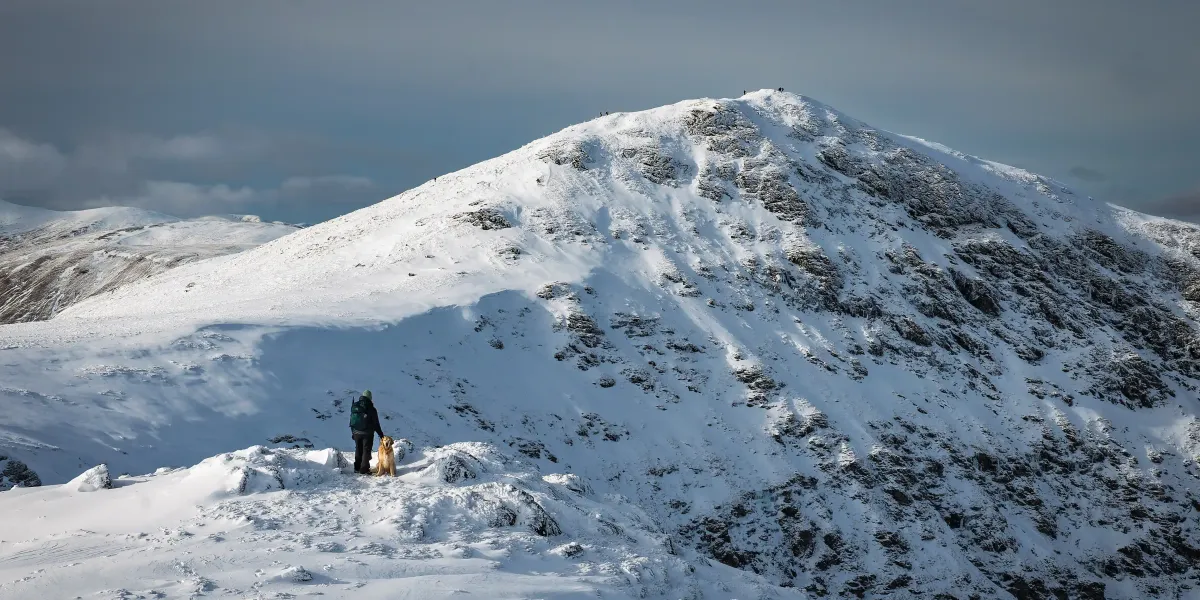
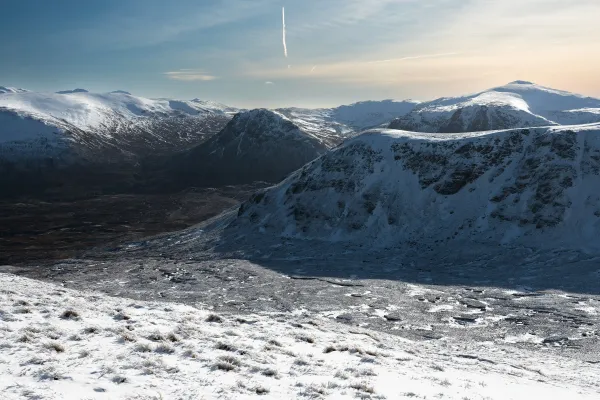
The view towards the summit on the ridge walk
The ridge is broad enough to feel secure but narrow enough to feel like proper mountain terrain. In clear weather, you can see Ben Lawers dominating the skyline to the east and Schiehallion’s distinctive cone further north-east. The sense of space up here is remarkable — Glen Lyon stretches out below you as the longest enclosed glen in Scotland, and you can trace its full length from the ridge.
Stuchd an Lochain Summit — 960m
The final ascent to the summit is a short, sharp push from the ridge — one last effort before you can enjoy your sandwiches at the top. The summit cairn sits at 960m and the most dramatic feature is the view down into the corrie on the north-east face, where Lochan nan Cat sits in a dark, steep-walled bowl. It’s a surprisingly wild and dramatic feature on what is otherwise a rounded mountain.
On a clear day, the summit panorama takes in Meall Bhuide across Loch an Daimh, the Ben Lawers range to the east, and the hills of Rannoch to the north. There’s a real sense of remoteness up here — Glen Lyon doesn’t get the foot traffic of Glencoe or the Trossachs, and you may well have the summit to yourself.
The Descent
The return retraces your steps over the ridge and back down the steep north face to Giorra Dam. Take particular care on the descent of the north face — the steep gradient and loose ground (or ice in winter) make this the most likely place to take a tumble. Trekking poles are a genuine help here.
Once back at the dam, the walk back to the car park is short and flat — a pleasant cool-down after the intensity of the ridge.
When to Climb Stuchd an Lochain
Summer (May–September) is the most straightforward time. The north face is free of ice, the ridge is at its most enjoyable, and the long days give you flexibility. Glen Lyon is particularly beautiful in summer with wildflowers along the approach.
Autumn (October–November) brings golden colours to Glen Lyon and often crystal-clear visibility from the ridge. The shorter days mean starting earlier, but the mountain is likely to be deserted and the autumn light on Lochan nan Cat is spectacular.
Winter (December–March) — when we did this — transforms the north face into a serious winter ascent. Crampons and an ice axe are essential, and the steep frozen ground demands confidence and experience. The ridge can also be corniced on the Lochan nan Cat side, so take care near the edge. That said, the mountain in snow is stunning and the winter views from the ridge are some of the best we’ve had.
Spring (March–April) can be a mix of snow on the north face and thawing conditions. Check forecasts carefully and be prepared for winter gear on the upper sections.
Combine With
Stuchd an Lochain shares its car park with Meall Bhuide, making the two a natural pairing if you’ve got the energy. Meall Bhuide is gentler and shorter, so doing Stuchd an Lochain first and Meall Bhuide second is a good strategy — or save Meall Bhuide for the following day if you’re camping or staying locally.
The Ben Lawers range is accessible from the other side of Glen Lyon, about 30 minutes’ drive east. Schiehallion is also within reach from the Tummel Bridge road.
Tips for This Route
- Don’t miss the cairn. The turn-off from the dam path is easy to walk past. Look for the small cairn on your left after passing the dam — if you reach the boathouse, go back.
- The north face is the crux. Steep, direct, and icy in winter. Take it seriously and bring appropriate gear for the conditions.
- The ridge is the reward. Don’t rush it — the views across Glen Lyon are some of the best on any Munro in this area.
- Look into the corrie. Lochan nan Cat is one of the hidden gems of this mountain — make sure you peer over the edge from the summit ridge.
- Glen Lyon itself is worth exploring. The drive in passes ancient woodland, Fortingall (home to the oldest tree in Europe), and some beautiful picnic spots along the river.
Frequently Asked Questions
How hard is Stuchd an Lochain? The steep north face makes this feel harder than the statistics suggest. The 760m of ascent is concentrated into a short, direct climb that gets your heart rate up quickly. Once on the ridge, the going is easier. Most fit walkers complete it in 4–6 hours.
Is Stuchd an Lochain good for beginners? The steep north face is quite demanding for a first Munro. If you’re new to hillwalking, Meall Bhuide — which starts from the same car park — is a much gentler introduction. Once you’ve built up confidence, come back for Stuchd an Lochain.
Where do you park for Stuchd an Lochain? Small free car park at the base of Giorra Dam in Glen Lyon (PH15 2PP). Space for around 10 cars. No facilities. Shared with hikers heading for Meall Bhuide.
Is Stuchd an Lochain suitable for dogs? The ridge walk is fine for most dogs. The steep north face is the main concern — confident, agile dogs will manage it, but less experienced mountain dogs may struggle with the gradient, especially in wet or icy conditions. Keep dogs on a lead near any livestock in Glen Lyon.