Munro · No. 7 + 8 · Ben Lawers and Beinn Ghlas — Route Guide — Ben Lawers: Hill of the Loud Stream; Beinn Ghlas: Grey-Green Mountain
Munro · No. 7 + 8 · Ben Lawers and Beinn Ghlas — Route Guide — Ben Lawers: Hill of the Loud Stream; Beinn Ghlas: Grey-Green Mountain
National Trust for Scotland car park on the minor road between Loch Tay and Glen Lyon. Parking charges apply (NTS members free). Fills quickly in summer — arrive early.
Ben Lawers is the highest mountain in the Southern Highlands and the 10th highest in Scotland. At 1,214m, it towers above Loch Tay with a presence that makes it one of the most recognisable peaks in Perthshire — and one of the most rewarding to climb. Pair it with Beinn Ghlas, which sits directly on the route up, and you’ve got a double-bagger that delivers everything from rare arctic-alpine flora to one of the biggest panoramas in the country.
This was our 7th and 8th Munro and at the time, a double-bagger still felt like a real achievement. Looking back, this was one of those days that really cemented our love for Munro bagging — the combination of the NTS nature reserve, the feeling of breaking 1,000m twice in one day, and that summit view across half of Scotland.
| Munro Name | Pronunciation | Translation | Height |
|---|---|---|---|
| Ben Lawers | Ben Law-ers | Hill of the Loud Stream | 1,214m |
| Beinn Ghlas | Ben Glass | Grey-Green Mountain | 1,103m |
These two are almost always climbed together as Beinn Ghlas sits directly on the route up to Ben Lawers. It’s essentially impossible to reach Lawers without going over or around Beinn Ghlas first, so you might as well bag both while you’re at it.
Ben Lawers is nationally significant for its botanical heritage. The mountain’s calcium-rich rocks support one of the finest collections of arctic-alpine plants in Britain, including species that survived the last Ice Age. The National Trust for Scotland acquired the mountain in 1950 specifically to protect this habitat, making it one of the earliest conservation purchases in the Highlands.
The NTS nature reserve covers much of the southern slopes and the information boards at the car park are worth reading before you set off — knowing what you’re walking through adds another layer to the day.
The hike starts from the Ben Lawers Nature Reserve car park on the minor road between Loch Tay and Glen Lyon. The car park sits at around 450m elevation, which gives you a significant head start on the climbing before you even lace up your boots.
Parking charges apply, though NTS members park free. The car park fills quickly in summer, particularly on weekends — arriving by 8:30am is advisable on a good-weather Saturday. There’s an information board with details about the nature reserve and the rare plants that grow on the mountain.
From Perth, the car park is about 50 minutes’ drive via the A85 and the minor road along the north side of Loch Tay. From Glasgow or Edinburgh, allow around 90 minutes to two hours.
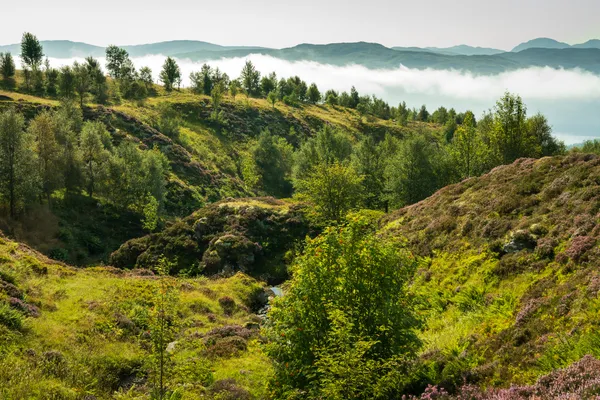
From the car park, the path heads north through the nature reserve and is well maintained for the first section. You climb steadily, crossing a stile, and the views behind you over Loch Tay start to open up almost immediately. On a clear morning, the loch stretches out below you with the hills of Glen Lyon rising beyond it.
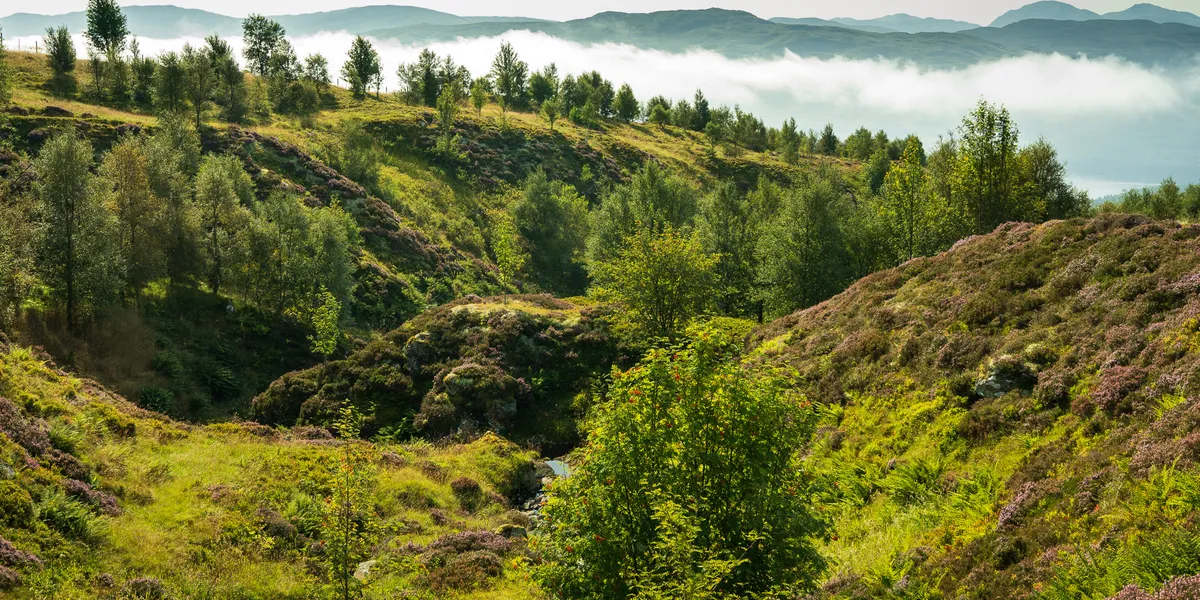
Views opening up over Loch Tay during the ascent of Beinn Ghlas
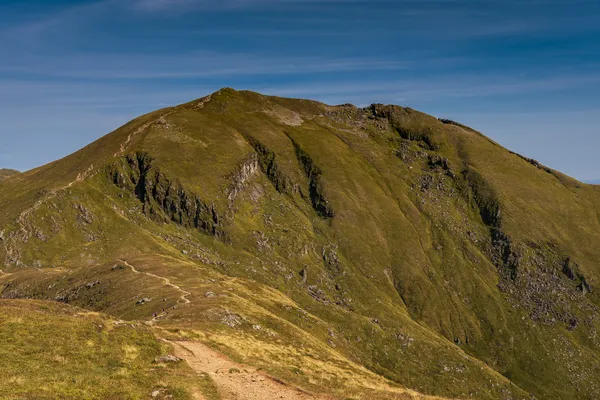
The path up Beinn Ghlas is straightforward and well-trodden. It zigzags up the steeper sections and the gradient, while constant, never feels brutal. As you gain height, the landscape becomes more exposed and the character changes from grassy moorland to rockier ground. On our day the wind really started to pick up here — a reminder that these are serious mountains despite the well-maintained paths.
Reaching the summit of Beinn Ghlas feels like a proper milestone. At 1,103m, you’re above the magic 1,000m mark and the views are already fantastic — Schiehallion’s distinctive cone is prominent to the north-east, and the Glen Lyon hills stretch out to the west. But you can see Ben Lawers looming ahead, noticeably higher, and you know the day isn’t done yet.
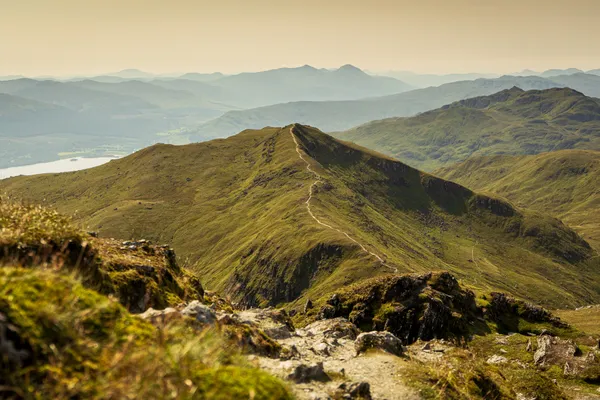
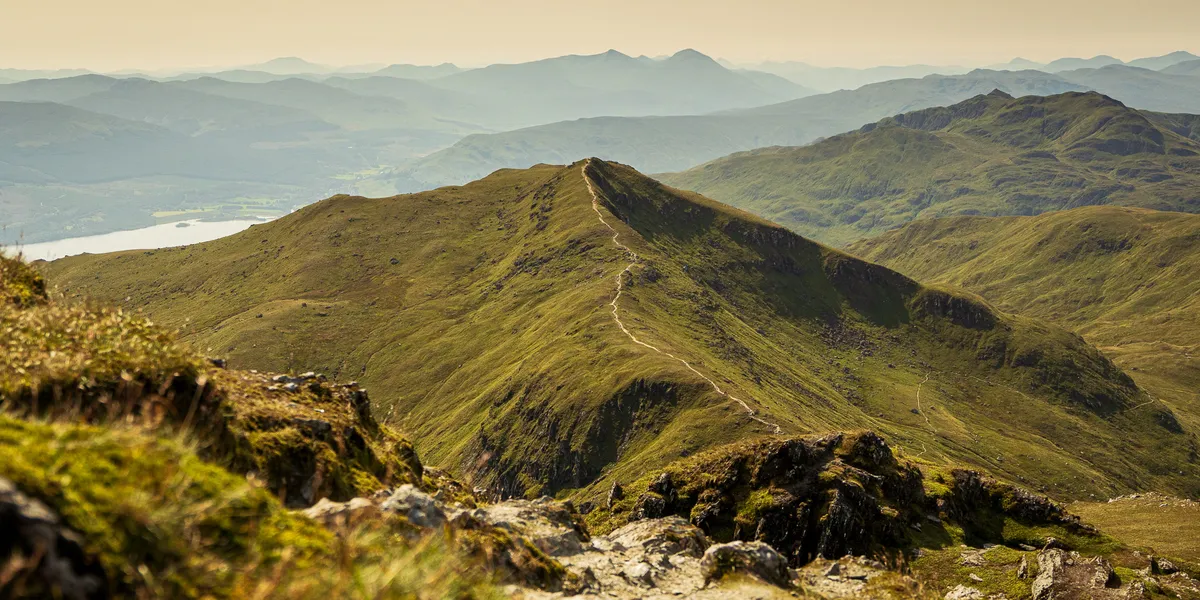
From Beinn Ghlas, the route descends into the bealach between the two peaks. You lose about 150m of height here, which stings a little knowing you’ve got to climb it all back and then some. The path down is rocky in places and requires a bit of care, especially if it’s wet.
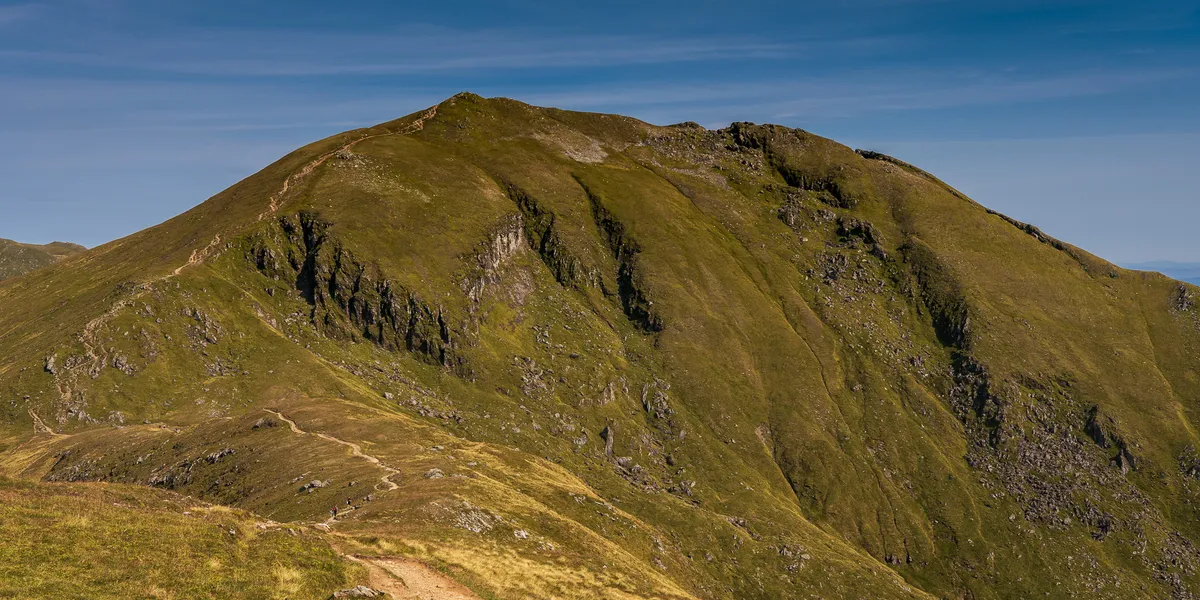
The ridge between Beinn Ghlas and Ben Lawers
The ascent up Ben Lawers from the bealach is steeper and more sustained than anything on Beinn Ghlas. The path is well-marked but the final section is rocky and exposed. The last 100m or so felt like a proper scramble up loose stones and we were grateful for the calm weather — in high winds, this section would be significantly more challenging.
This is the stretch where the day changes character. Beinn Ghlas feels like a warm-up; the push from the bealach to Lawers feels like the real mountain.
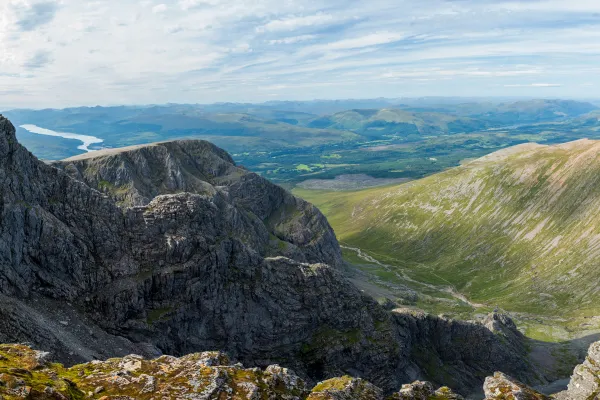
The summit is marked by a large cairn and the views are absolutely spectacular. On a clear day, the panorama from Ben Lawers is one of the biggest in Scotland — you can see an enormous chunk of the country from up here.
Summit panorama from Ben Lawers
To the north-west, the Glencoe mountains line the horizon. To the north-east, the Cairngorms are visible on a good day. To the south, Ben More and Stob Binnein dominate the skyline above Crianlarich. Closer to hand, Meall Corranaich and Meall a’ Choire Leith — the other two Munros in the Lawers range — sit along the ridge to the west. To the east, Schiehallion stands apart in its unmistakable conical profile, and Stuchd an Lochain is visible above Glen Lyon. On a really good day, people claim you can see both coasts — we couldn’t quite manage that, but the Breadalbane panorama was more than enough.
We sat at the summit for a good 20 minutes just taking it all in. At 1,214m, there’s a real sense of height — you’re above most things, and the exposure is noticeable. Bring warm layers regardless of conditions at the car park.
We retraced our steps back over Beinn Ghlas and down to the car park. The descent felt longer than expected — nearly 19km total when all was said and done, which was more than we’d planned for. The rocky descent from Lawers back to the bealach demands concentration, and re-ascending Beinn Ghlas on tired legs is one of those moments where you question whether the double-bagger was really necessary. It was. But your legs might disagree.
Once back over Beinn Ghlas, the descent to the car park is pleasant and the path is forgiving on the knees compared to steeper mountains like Ben More.
Summer (May–September) is the best time for the longest days and driest conditions. The nature reserve is at its most interesting botanically, with rare alpine flowers in bloom. The car park fills early on good-weather weekends.
Autumn (October–November) brings golden colours on the lower slopes and often exceptional visibility. The shorter days mean you need to start earlier, but the mountain is quieter and the light is spectacular.
Winter (December–March) turns Ben Lawers into a serious mountaineering day. The exposed summit ridge and the bealach between the two peaks can accumulate significant snow and ice. Crampons and an ice axe are essential, and the rocky sections on the final push to Lawers become considerably more challenging. That said, experienced winter walkers will find Lawers a rewarding winter peak — the snow-covered views are stunning.
Spring (March–April) can be a mix of lingering snow on the upper sections and boggy conditions lower down. Check MWIS forecasts and be prepared for winter conditions above 900m.
Ben Lawers and Beinn Ghlas are usually enough for one day given the total distance. However, strong walkers sometimes extend the day to include Meall Corranaich and Meall a’ Choire Leith, which are accessible from the same car park and can be done as a separate circuit on the same day or the following morning.
The Glen Lyon hills — Stuchd an Lochain and Meall Bhuide — share a car park at Loch an Daimh about 30 minutes’ drive west along Glen Lyon, making them a good option if you’re staying in the area for a weekend. Schiehallion is also nearby, accessible from the road between Tummel Bridge and Coshieville.
How hard is Ben Lawers? The paths are well-maintained and the navigation is straightforward, but the total distance (19km) and ascent (960m) make this a full day. The push from the bealach to the summit of Lawers is the most physically demanding section. Most fit walkers can manage it in 5–7 hours.
Is Ben Lawers good for beginners? It’s a step up from introductory Munros like Schiehallion or The Cairnwell Munros due to the distance and the double-summit profile. If you’ve done a couple of Munros and are comfortable with a longer day, it’s absolutely achievable. If it’s your first, consider starting with something shorter.
Where do you park for Ben Lawers? The NTS Ben Lawers Nature Reserve car park on the minor road between Loch Tay and Glen Lyon (PH15 2ET). Charges apply, NTS members free. Arrive early on summer weekends.
Can you do all four Lawers Munros in a day? Yes — strong walkers sometimes combine Ben Lawers and Beinn Ghlas with Meall Corranaich and Meall a’ Choire Leith for a four-Munro day. It’s a long day (25km+) but entirely doable in summer with an early start.
Is Ben Lawers suitable for dogs? The tourist path to Beinn Ghlas is manageable for most dogs. The rockier sections on the push to Lawers and the descent from the bealach are rougher going and some dogs may struggle. The NTS nature reserve asks that dogs are kept on leads to protect the rare alpine plants and ground-nesting birds — please respect this.